

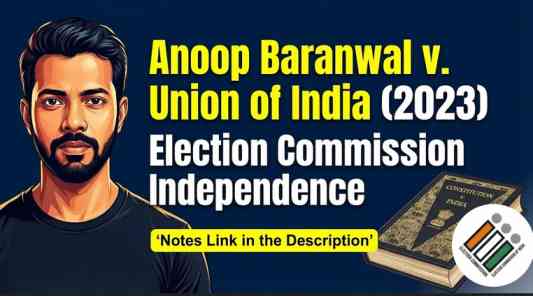
Anoop Baranwal v. Union of India (2023)
Independence of the Election Commission, appointment process for the Chief Election Commissioner and Election Commissioners, and protection of free and fair elections in India.

Table of Contents
Quick Summary
In simple words: this case is about who should appoint the Chief Election Commissioner (CEC) and the Election Commissioners (ECs) of India, and how to keep the Election Commission truly independent from the ruling government.
Earlier, the President appointed the CEC and ECs only on the advice of the Council of Ministers. In reality, this meant the executive alone controlled appointments. The petitioner, Anoop Baranwal, argued that this system could weaken the neutrality of the Election Commission.
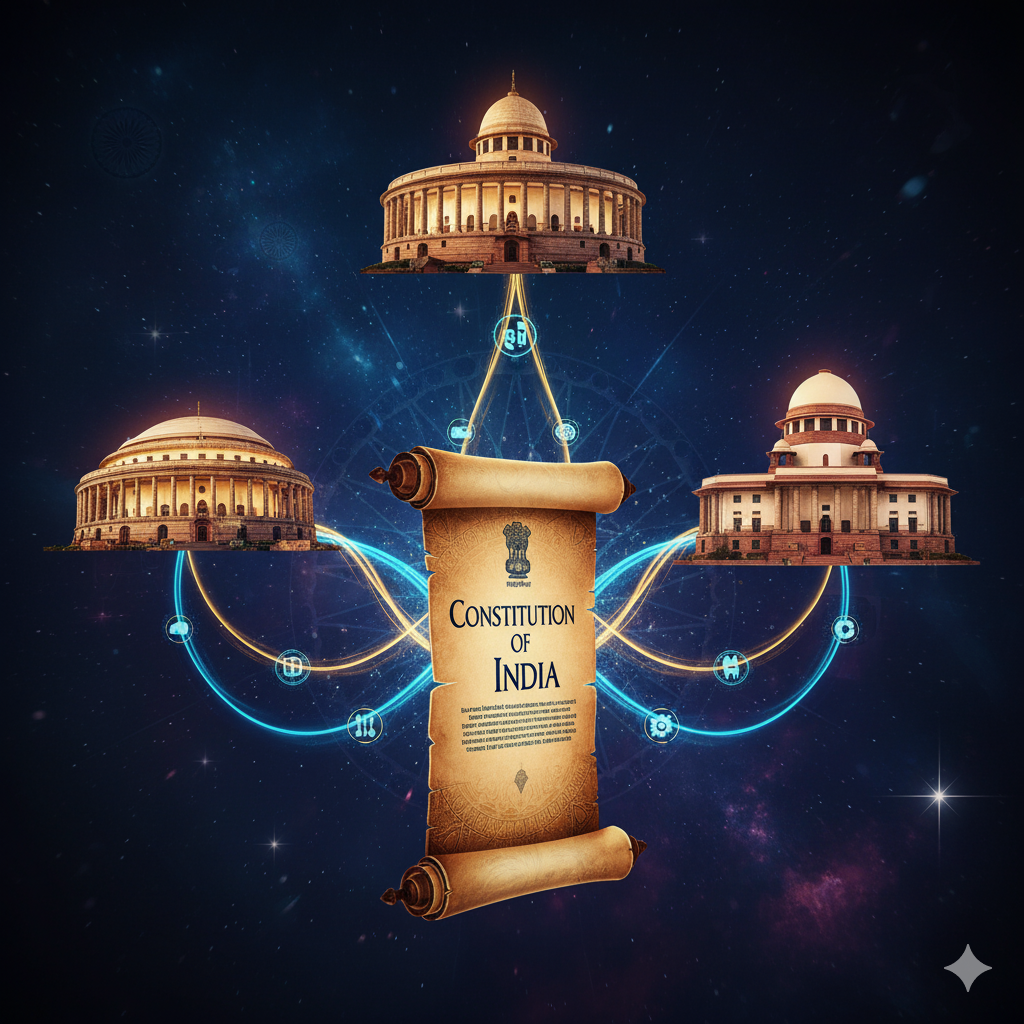
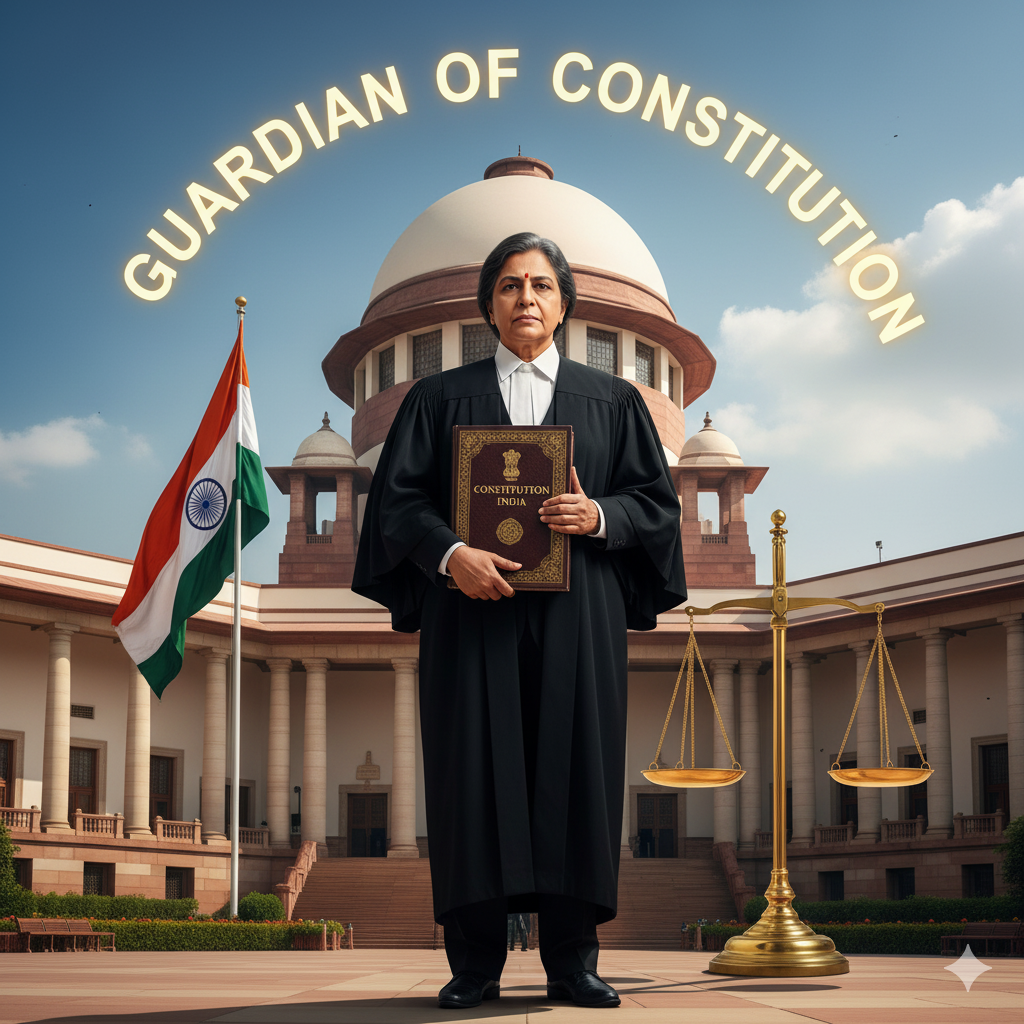
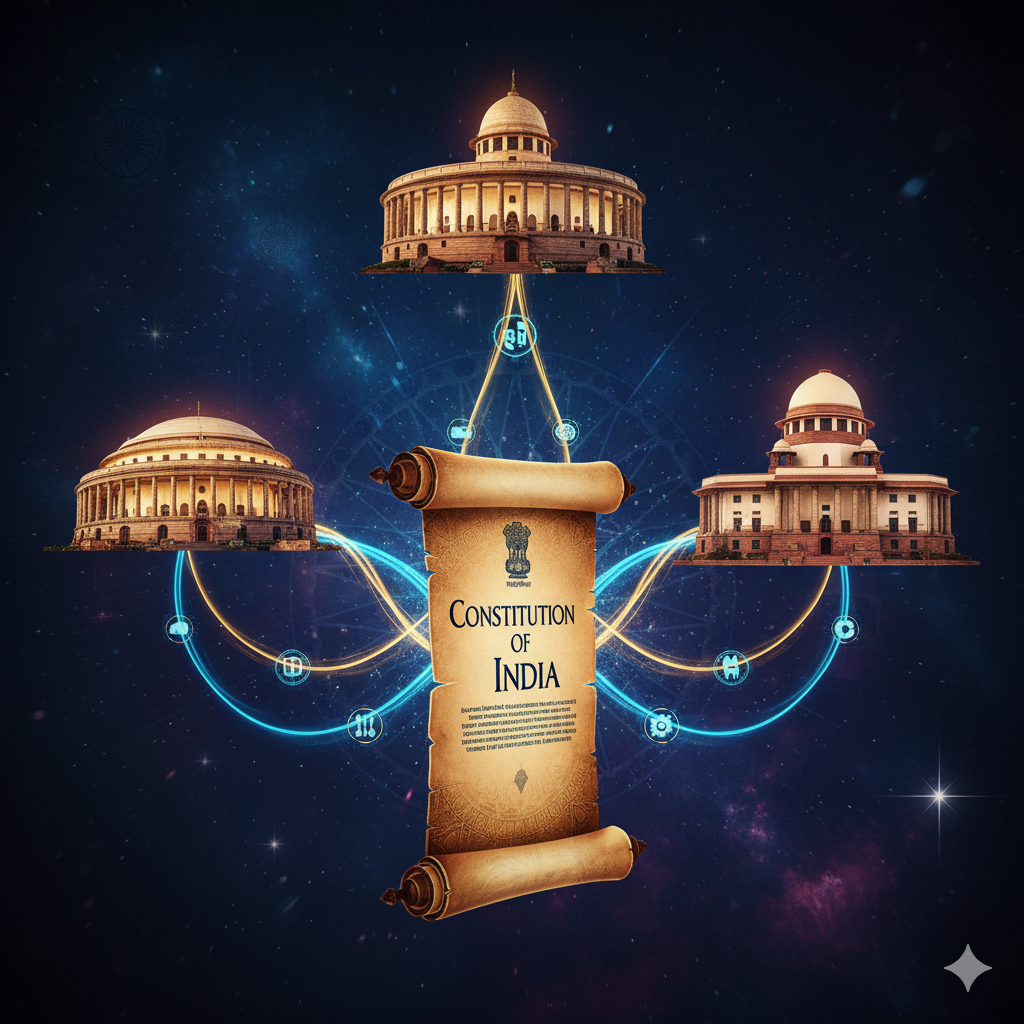
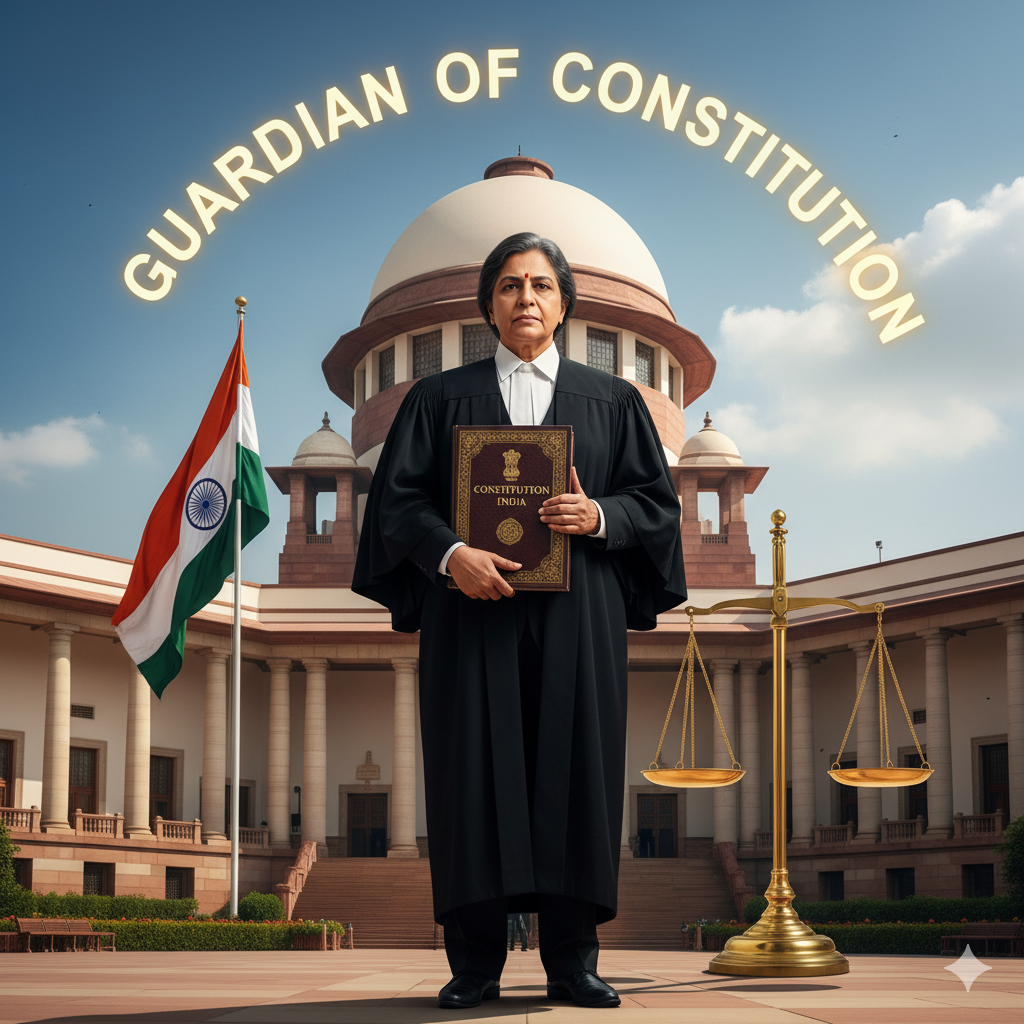
The Supreme Court stepped in and said that, till Parliament passes a law, a three-member committee will recommend names for CEC and ECs: the Prime Minister, the Leader of Opposition (or leader of the largest opposition party) in the Lok Sabha, and the Chief Justice of India. The Court linked this directly to the basic structure principle of free and fair elections.
- Petition under Article 32 challenging appointment process of CEC and ECs.
- Court filled a 70+ year gap where Parliament had not made a law under Article 324(2).
- New interim system: PM + LoP + CJI committee to suggest names.
- Goal: protect independence and public trust in the Election Commission of India.
Issues Before the Court
- Independence issue: Does the existing system, where the executive alone controls the appointment of the CEC and ECs, threaten the independence and neutrality of the Election Commission?
- Vacuum under Article 324(2): Because Parliament has not made a law on appointments for more than 70 years, does the executive get unlimited and unchecked discretion?
- Judicial role: Can the Supreme Court step in and lay down guidelines for appointments when Parliament has failed to act, in order to protect constitutional values?
- Basic structure angle: Are free and fair elections, backed by an independent Election Commission, part of the basic structure of the Constitution, so that the Court must actively protect them?
Rules & Constitutional Provisions
- Article 324(1): Vests the “superintendence, direction and control” of elections in the Election Commission of India.
- Article 324(2): Says that the CEC and other ECs are to be appointed by the President, subject to any law made by Parliament. Parliament, however, had not passed such a law on the exact appointment process.
- Basic structure doctrine: Free and fair elections, and therefore the independence of the Election Commission, are part of the basic structure and cannot be damaged.
- Separation of powers: Legislature, executive, and judiciary have separate fields, but the Court can step in to protect constitutional values when there is clear inaction by the legislature.
- Precedent – Vineet Narain v. Union of India: The Court earlier issued guidelines to protect the independence of investigative agencies till Parliament made a law. This logic is extended here to the Election Commission.
Facts – Timeline Style
Step-by-step eventsLong-standing practice
For decades, the President appointed the CEC and ECs purely on the advice of the Council of Ministers. There was no independent or multi-member committee involved.
Concern over executive dominance
Critics and expert bodies warned that if the ruling government alone controls appointments, the Election Commission might not appear neutral, especially in tight political contests.
Writ petition under Article 32
Public-spirited citizen Anoop Baranwal filed a petition in the Supreme Court, saying that the current system violates constitutional principles and ignores the mandate of Article 324(2).
Reference to Constitution Bench
Because the case involved the structure of a constitutional body, it was placed before a five-judge Constitution Bench of the Supreme Court.
Judgment and new interim system
On 2 March 2023, the Court delivered its judgment, creating a new interim selection committee (PM + LoP + CJI) to recommend names for the CEC and ECs until Parliament passes a law.

Arguments – Appellant vs Respondent
Petitioner – Anoop Baranwal
- Executive has exclusive control over appointments of CEC and ECs. This can affect neutrality and public confidence.
- This goes against the separation of powers principle and the idea of checks and balances.
- Election Commission is a constitutional body, like the judiciary or the CAG. Its appointments should not be left to the ruling government alone.
- Article 324(2) clearly expects Parliament to make a law. No law for more than 70 years has created a dangerous vacuum.
- Law Commission, Second Administrative Reforms Commission and other committees have recommended a broad-based selection committee including the PM, Leader of Opposition and CJI. The Court should now adopt such a model.
Respondent – Union of India
- The Constitution itself allows the President, acting on the advice of the Council of Ministers, to appoint the CEC and ECs until Parliament passes a law.
- The Court should not enter the legislative field. Making a selection procedure is the job of Parliament, not the judiciary.
- India has held credible elections under the existing system for decades, so there is no urgent need for change through judicial orders.
- If the process must be changed, it should be done by a detailed parliamentary law, not by judge-made guidelines.
- Judicial interference in this sensitive area may itself disturb the constitutional balance between organs of the State.
Judgment – What the Supreme Court Held
Unanimous Constitution BenchA five-judge Constitution Bench of the Supreme Court delivered a unanimous judgment. The lead opinion was written by Justice K.M. Joseph. The Court agreed that the existing system, where the executive alone controls appointments, is not ideal for an institution that must be independent.
The Court recognised that Article 324(2) expects Parliament to frame a law on appointments. Parliament’s long silence created a constitutional vacuum. In such a situation, the Court said it can step in, like it did earlier in Vineet Narain, to lay down temporary rules till a law is made.
Therefore, the Court directed that appointments of the CEC and ECs shall, until Parliament enacts a law, be made on the recommendation of a high-powered committee consisting of:
- Prime Minister
- Leader of Opposition in the Lok Sabha (or leader of the largest opposition party)
- Chief Justice of India
The Court also noted that while the CEC has strong protection against removal (like a Supreme Court judge), the ECs do not enjoy the same level of protection. The Court urged Parliament to consider removing this imbalance so that the entire Election Commission can function fearlessly.

Ratio Decidendi – Core Legal Reasoning
- Free and fair elections are part of the basic structure: Without an independent Election Commission, free and fair elections cannot be guaranteed. So, protecting the Commission’s independence is a constitutional necessity.
- Parliament’s silence created a vacuum: Article 324(2) expects Parliament to regulate appointments. Parliament’s failure for over seven decades allowed uncontrolled executive discretion, which the Court considered unhealthy for democracy.
- Judicial power to issue interim guidelines: In the absence of a law, the Supreme Court can issue guidelines to protect constitutional values and basic structure, while still encouraging Parliament to pass its own law.
- Need for a broad-based selection committee: Involving the PM, the Leader of Opposition, and the CJI reduces the risk of partisan appointments and makes the process more balanced and transparent.
- Institutional design matters: Independence is not only about words in the Constitution, but also about how institutions are designed and how key officers are appointed and protected.
Why This Case Matters
This judgment is a landmark for Indian democracy. It does not change one election result directly, but it changes how the referee of elections is chosen. That referee is the Election Commission of India.
By sharing power between the government, the opposition and the judiciary, the Court has tried to make sure that the Election Commission does not even appear to be a tool of the ruling party. In exams, you can use this case whenever you discuss basic structure, free and fair elections, separation of powers, or independence of constitutional bodies.
The judgment also sends a message to Parliament: when the Constitution expects a law on a sensitive topic, ignoring that duty for too long can push the Court to act. Still, the Court clearly leaves the final word to Parliament by calling its own guidelines “interim”.
Key Takeaways for Students
- Article 324(2) expects Parliament to make a law on appointment of CEC and ECs. Parliament did not do this for over 70 years.
- Earlier, appointments were fully controlled by the executive through the Council of Ministers.
- Supreme Court formed an interim selection committee: PM + Leader of Opposition + Chief Justice of India.
- Aim: strengthen independence and public confidence in the Election Commission.
- Free and fair elections and an independent Election Commission are part of the basic structure.
- Court can fill constitutional gaps with guidelines till Parliament acts, as in Vineet Narain.
- Judgment highlights unequal protection: CEC has strong removal protection, ECs do not.
- Use this case as a standard example for questions on institutional independence.
Mnemonic + 3-Step Hook
Mnemonic: “ANOOP = Appointment Needs Oversight Of Power”
- A – Appointment: Case is about appointment of CEC and ECs.
- N – Needs: Need for a clear law under Article 324(2).
- O – Oversight: Oversight through a three-member committee.
- O – Of: Of the executive’s unilateral control.
- P – Power: Power must be balanced to protect basic structure.
3-Step Exam Hook
- Step 1 – Identify the value: Free and fair elections + independent Election Commission = basic structure.
- Step 2 – Spot the problem: Executive alone controlled appointments; Parliament did not pass a law under Article 324(2).
- Step 3 – State the solution: Supreme Court created an interim selection committee (PM + LoP + CJI) till Parliament enacts a proper law.
IRAC Outline
I – Issue
Whether the existing system of appointing the Chief Election Commissioner and Election Commissioners, controlled entirely by the executive, violates the independence of the Election Commission and whether the Supreme Court can frame a temporary appointment procedure in the absence of a parliamentary law under Article 324(2).
R – Rule
Article 324(1) and (2) of the Constitution, the basic structure doctrine (free and fair elections, independent constitutional bodies), the principle of separation of powers, and precedent from Vineet Narain which allows the Court to issue guidelines till Parliament enacts a law.
A – Application
The Court found that Parliament had failed to act for decades, leaving appointments fully in executive hands. This threatened the perceived neutrality of the Election Commission. To protect basic structure values and avoid continued dependence on one organ of the State, the Court applied the principle from Vineet Narain and designed a balanced committee involving the government, the opposition and the judiciary.
C – Conclusion
Till Parliament passes a law under Article 324(2), appointments of the CEC and ECs will be made on the recommendation of a three-member committee consisting of the Prime Minister, the Leader of Opposition (or leader of the largest opposition party) in the Lok Sabha, and the Chief Justice of India. This arrangement is meant to secure the independence and credibility of the Election Commission.
Glossary – Simple Meanings
- Election Commission of India (ECI)
- A constitutional body that conducts elections to Parliament, state legislatures and the offices of President and Vice-President.
- Basic structure
- Core principles of the Constitution which cannot be destroyed even by a constitutional amendment, such as democracy and free and fair elections.
- Constitutional vacuum
- A situation where the Constitution expects a law, but Parliament has not passed one, leaving an important area unregulated.
- Leader of Opposition (LoP)
- The leader of the largest opposition party in the Lok Sabha. If there is no formal LoP, the leader of the largest opposition party is treated in that role for this case.
- Selection committee
- A small group of high-level persons (here, PM + LoP + CJI) who jointly recommend names for important constitutional posts.
- Interim guideline
- A temporary rule made by the Court to operate only till Parliament passes a proper law on the subject.
FAQs – Student-Friendly Doubts







































































Popular & Recent Post









































Comment
Nothing for now