
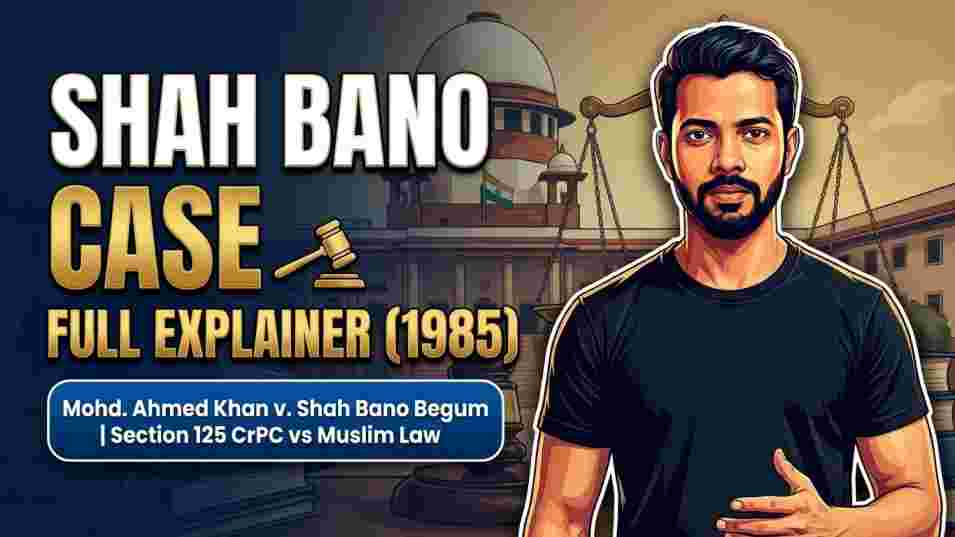
Mohd. Ahmed Khan v. Shah Bano Begum (1985)
Simple, classroom-style breakdown of the Shah Bano case: story, issues, judgment, ratio, and why it still matters for maintenance and Muslim personal law in India.

Quick Summary
CASE_TITLE: Mohd. Ahmed Khan v. Shah Bano Begum (1985), popularly known as the Shah Bano case, is a landmark judgment of the Supreme Court of India on maintenance for a divorced Muslim woman.
The husband, Mohd. Ahmed Khan, divorced his wife, Shah Bano, and argued that under Muslim personal law he was responsible to maintain her only during the iddat period and that payment of mahr was enough. Shah Bano, who was unable to maintain herself, claimed maintenance under Section 125 CrPC (now Section 144 BNSS).
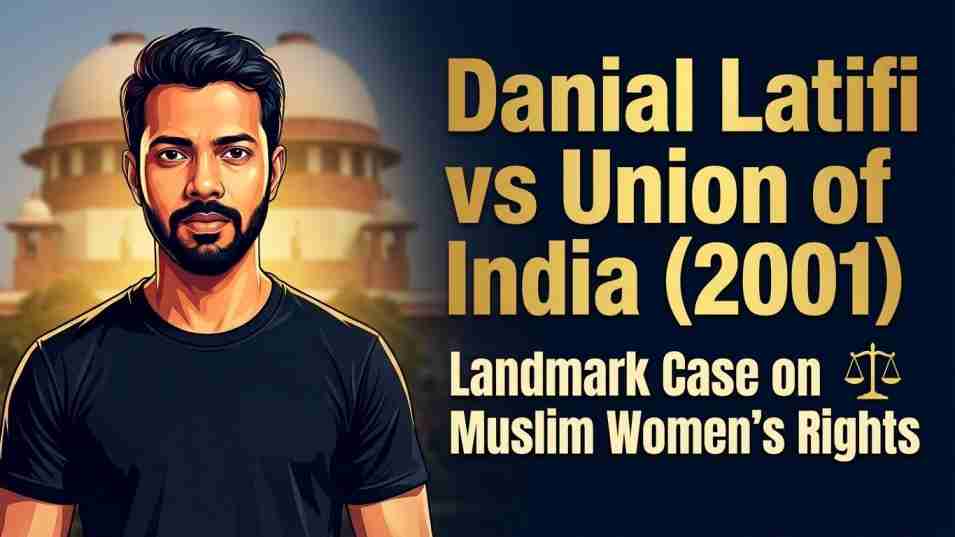
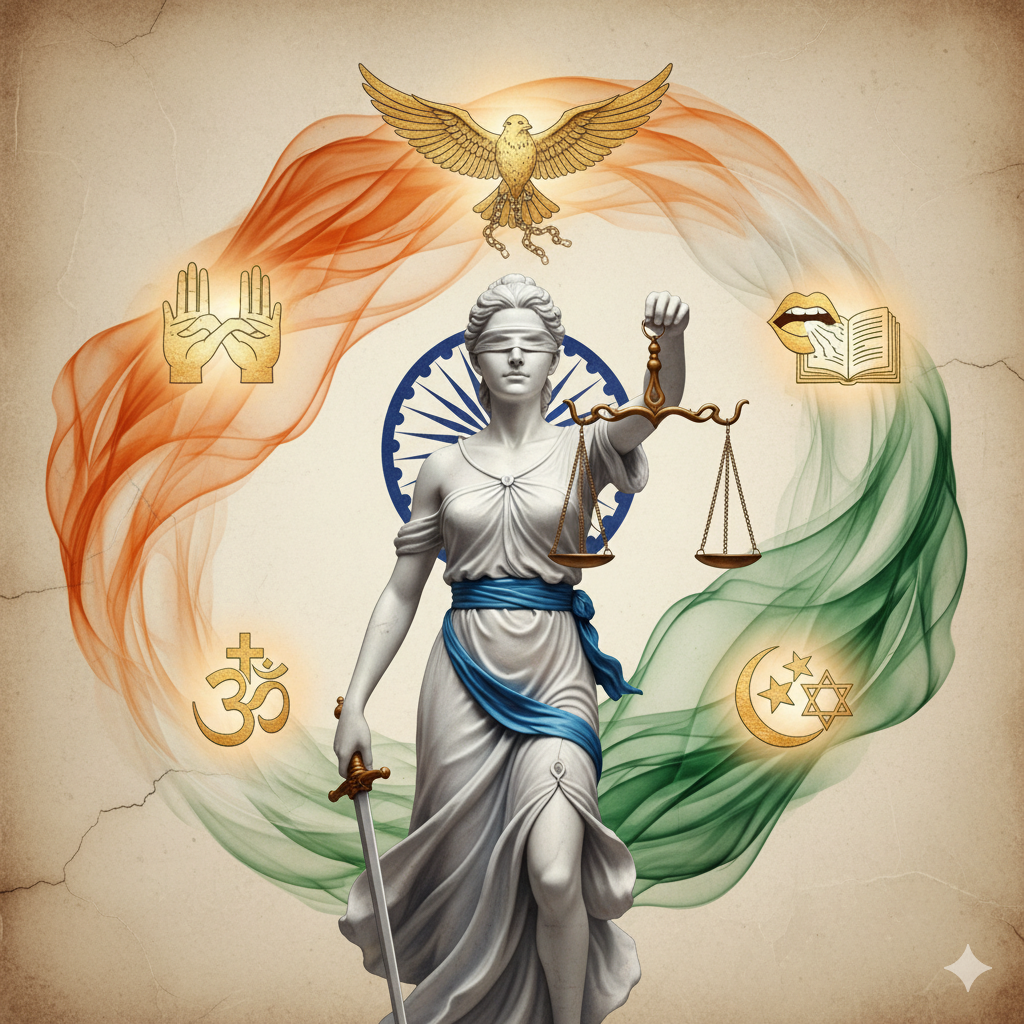
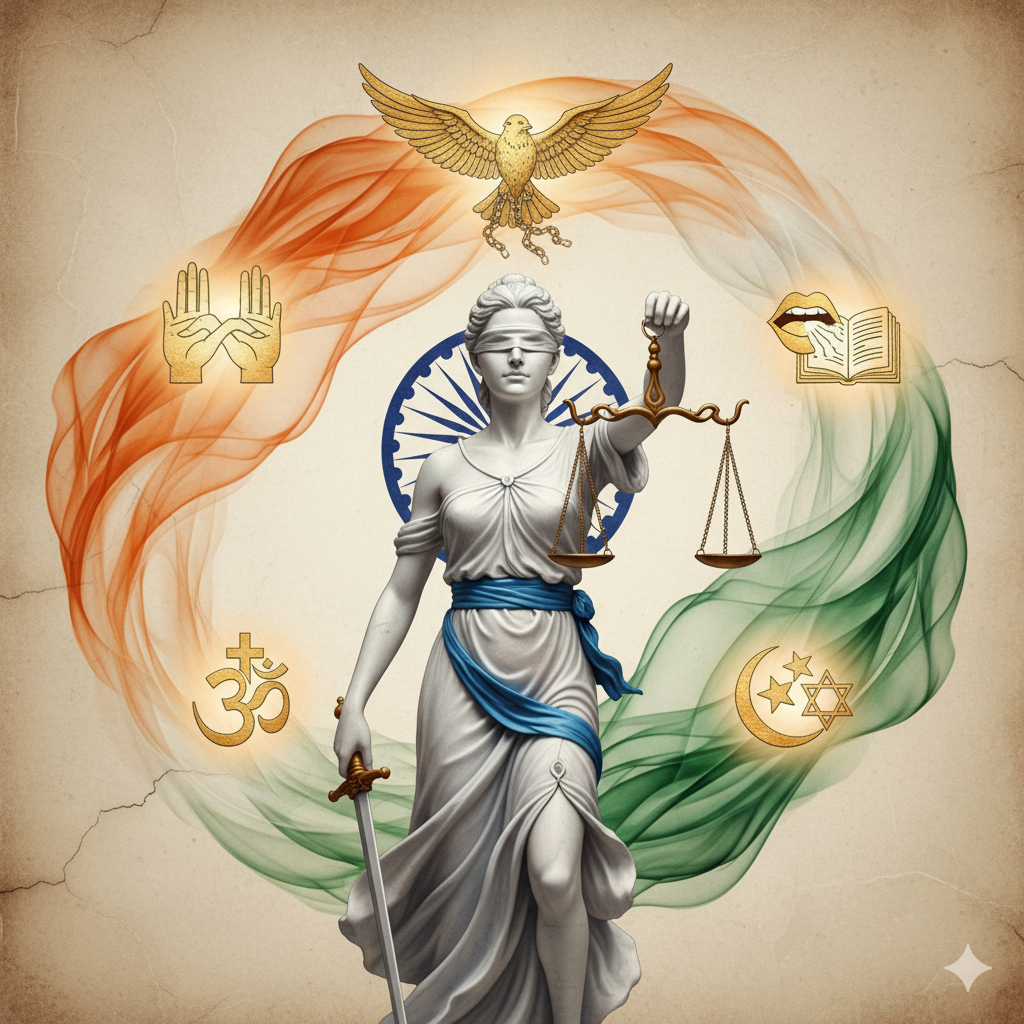
The key legal conflict was between secular maintenance law (Section 125 CrPC) and religion-based personal law (Muslim personal law). The Supreme Court held that Section 125 CrPC is a secular, protective provision that applies to all, including Muslims, and that a divorced Muslim woman unable to maintain herself can claim maintenance beyond the iddat period.
This ruling strongly protected the rights of divorced Muslim women and later led to the political and legal debate that resulted in the Muslim Women (Protection of Rights on Divorce) Act, 1986.
- Section 125 CrPC is a religion-neutral maintenance provision for wives, children and parents.
- Divorced Muslim wife is also a "wife" under Section 125 till she remarries.
- Mahr is not a substitute for long-term maintenance.
- When there is conflict, secular maintenance law protects the woman from destitution.
Issues Before the Supreme Court
The Court had to answer three clear legal questions.
-
Extent of husband’s duty under Muslim personal law
Does the husband’s duty to maintain a divorced Muslim wife end with the completion of the iddat period? -
Applicability of Section 125 CrPC (now Section 144 BNSS) to Muslims
Does Section 125, a criminal procedure provision on maintenance, apply to Muslim husbands and divorced Muslim wives? -
Conflict between personal law and Section 125 CrPC
If there is a clash between Muslim personal law and Section 125, which one will prevail for the purpose of maintenance?
Rules & Legal Provisions
-
Section 125 CrPC (now Section 144 BNSS)
A summary, secular provision that allows a wife (including a divorced wife), minor children and dependent parents who are unable to maintain themselves to claim maintenance from a person having sufficient means. -
Explanation to Section 125 – "Wife"
The term "wife" includes a woman who has been divorced by, or has obtained a divorce from, her husband and has not remarried. -
Section 127(3)(b) CrPC
Allows cancellation of a maintenance order if the woman has received a sum payable on divorce under any customary or personal law. -
Muslim Personal Law (Shariat)
Husband has a duty to maintain his wife during marriage and for a limited period after divorce (iddat). Mahr is an amount promised at marriage.
Facts – Timeline Story
Mohd. Ahmed Khan, an advocate in Indore, married Shah Bano Begum according to Muslim personal law.
The couple later had three sons and two daughters.
Marital relationship broke down. Ahmed Khan forced Shah Bano to leave the matrimonial home.
She was elderly and had no independent income.
Shah Bano filed an application under Section 125 CrPC (now Section 144 BNSS) before the Magistrate, seeking ₹500 per month as maintenance.
Ahmed Khan pronounced irrevocable triple talaq on Shah Bano.
He argued that after talaq his duty was limited to the iddat period only, under Muslim personal law.
The Magistrate granted Shah Bano ₹25 per month as maintenance, much less than what she had sought.
On revision, the High Court enhanced the amount to ₹179.20 per month, considering the husband’s means.
Ahmed Khan challenged the High Court’s order before the Supreme Court of India, arguing that Section 125 could not override Muslim personal law and that he had already paid mahr (₹3000) and some maintenance.

Arguments – Appellant vs Respondent
Appellant: Mohd. Ahmed Khan
- Under Muslim personal law, his duty was to provide maintenance only during the iddat period after divorce.
- He had already given ₹200 per month for about two years and had deposited ₹3000 as mahr/dower.
- After talaq and after payment of mahr, Shah Bano was no longer his "wife"; therefore, Section 125 CrPC should not apply.
- He relied on Section 127(3)(b) CrPC and argued that payment under personal law on divorce cancels maintenance orders.
Respondent: Shah Bano Begum
- She was old, sick and without independent income, and could not maintain herself.
- Section 125 CrPC is secular and applies to all husbands who have sufficient means, irrespective of religion.
- She continued to be covered as a "wife" under Section 125 as a divorced wife who had not remarried.
- The amount of mahr and the limited iddat maintenance were not enough to support her lifelong basic needs.
Judgment of the Supreme Court
The Supreme Court dismissed Ahmed Khan’s appeal and confirmed the High Court’s order granting maintenance to Shah Bano.
- Section 125 CrPC is a secular, social justice provision designed to prevent destitution. It applies to all wives, including divorced Muslim wives, if they cannot maintain themselves.
- A divorced Muslim woman who has not remarried is covered by the word "wife" in Section 125 as long as she is unable to maintain herself.
- The Court held that personal law cannot override this statutory duty when it comes to preventing poverty and neglect.
- Section 127(3)(b) CrPC does not help the husband because mahr is consideration for marriage, not a lump sum in place of maintenance on divorce.
Therefore, Ahmed Khan was directed to pay maintenance to Shah Bano under Section 125 CrPC, despite his reliance on Muslim personal law and the payment of mahr.

Ratio Decidendi
-
Secular nature of Section 125 CrPC
Section 125 CrPC is a religion-neutral, criminal procedure provision meant to stop vagrancy and poverty. It applies to all citizens, including Muslims, regardless of personal law. -
Divorced Muslim woman as "wife"
A divorced Muslim woman who has not remarried and cannot maintain herself is treated as "wife" under Section 125 CrPC for the purpose of maintenance. -
Personal law vs statutory law
Where a personal law rule restricts maintenance to the iddat period but the woman is still unable to maintain herself, Section 125 prevails as a beneficial statutory remedy. -
Nature of mahr
Mahr is primarily a sum payable in consideration of marriage, not a payment in full settlement of all future maintenance. Therefore, it does not automatically end the duty under Section 125 CrPC.
Why the Shah Bano Case Matters
-
Women’s rights strengthened
The case recognised that a divorced Muslim woman has a real, enforceable right to maintenance if she cannot support herself. -
Priority of secular welfare law
It clearly stated that in matters of basic survival and dignity, secular welfare law like Section 125 CrPC can override restrictive rules of personal law. -
Debate on personal laws and uniform civil code
The judgment triggered a nationwide discussion on uniform civil code, minority rights and protection of women. -
Legislative response: 1986 Act
Parliament passed the Muslim Women (Protection of Rights on Divorce) Act, 1986 as a response, which itself became controversial and led to later constitutional challenges. -
Important for exams and practice
The case is regularly asked in LLB, LL.M and judicial services exams and is also cited in arguments around maintenance and gender justice.
Key Takeaways for Students
- Always remember: Section 125 CrPC = secular, welfare, summary remedy. It is not a part of personal law.
- A divorced Muslim woman who has not remarried is a "wife" under Section 125 for maintenance purposes.
- Personal law cannot be used to escape the duty to support a destitute divorced wife.
- Mahr is not a complete and final substitute for all future maintenance.
- After this case, always mention the Muslim Women (Protection of Rights on Divorce) Act, 1986 to show the legislative aftermath.
Mnemonic + 3-Step Memory Hook
Mnemonic: "SID M" – Secular law, Iddat, Divorced wife, Mahr
-
S – Secular Section 125
Section 125 CrPC is secular and applies to everyone, including Muslims. -
I + D – Iddat not the end for a Divorced wife
Iddat is not the final limit if the divorced wife cannot maintain herself. -
M – Mahr is not maintenance
Payment of mahr does not cancel the duty to pay maintenance under Section 125.
Before the exam, write "SID M" on your rough sheet and quickly expand it into these three ideas to recall the full ratio.
IRAC Outline – Answer in Exam Style
I – Issue
Whether a divorced Muslim woman who cannot maintain herself can claim maintenance from her former husband under Section 125 CrPC, even after the iddat period, despite rules of Muslim personal law and payment of mahr.
R – Rule
- Section 125 CrPC is a secular, summary remedy against destitution.
- "Wife" includes a divorced woman who has not remarried.
- Section 127(3)(b) applies only when a sum paid on divorce truly covers maintenance.
A – Application
Shah Bano was elderly, dependent and unable to maintain herself. Ahmed Khan had sufficient means but refused to support her after iddat. His reliance on Muslim personal law and mahr would leave her destitute. Applying Section 125, the Court treated her as a "wife" and held that mahr was not a full substitute for maintenance.
C – Conclusion
The Supreme Court held that a divorced Muslim woman who cannot maintain herself is entitled to maintenance under Section 125 CrPC from her former husband, even beyond the iddat period, and that personal law cannot defeat this secular welfare obligation.
Glossary – Important Terms
- Iddat
- Waiting period after divorce (or death of husband) during which a Muslim woman cannot remarry. Husband must maintain her during this period.
- Mahr (Dower)
- Sum of money or property promised by the husband to the wife at the time of marriage, payable immediately or later. It is not the same as monthly maintenance.
- Section 125 CrPC
- Provision in the Code of Criminal Procedure (now mirrored in Section 144 BNSS) that allows quick maintenance orders to prevent neglect of wives, children and parents.
- Personal Law
- Religion-based law governing marriage, divorce, maintenance, inheritance, etc., such as Muslim personal law or Hindu personal law.
- Secular Provision
- A law that applies equally to all individuals, without reference to their religion, caste or creed.
FAQs – Quick Classroom Doubts

























































































Popular & Recent Post































Comment
Nothing for now