

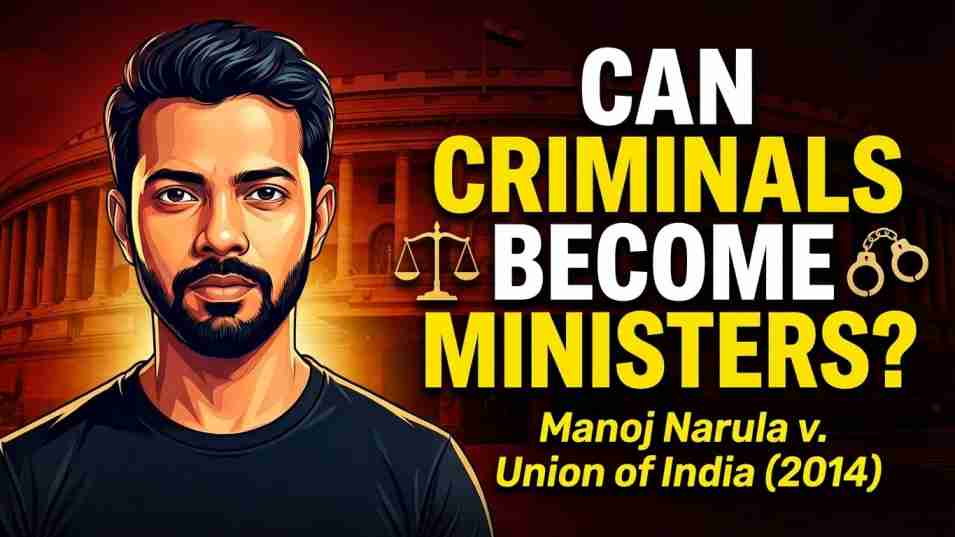
Manoj Narula v. Union of India (2014)
Can a person facing serious criminal charges become a Minister? This case explains how the Supreme Court balanced law, ethics and politics without crossing its own limits.

Table of Contents
Quick Summary
Intro + VideoThis case comes from a simple but powerful doubt: should people who are facing serious criminal cases be allowed to sit in the Council of Ministers and run the government?
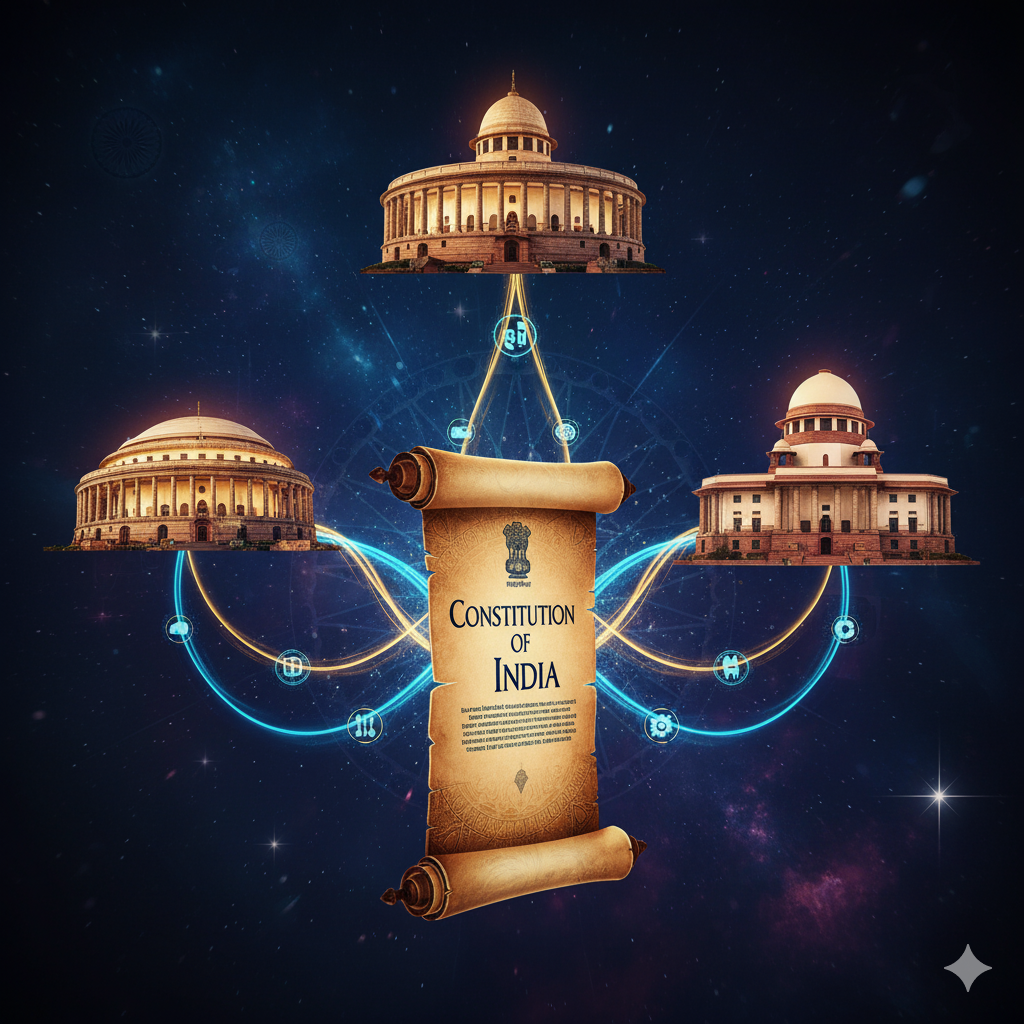
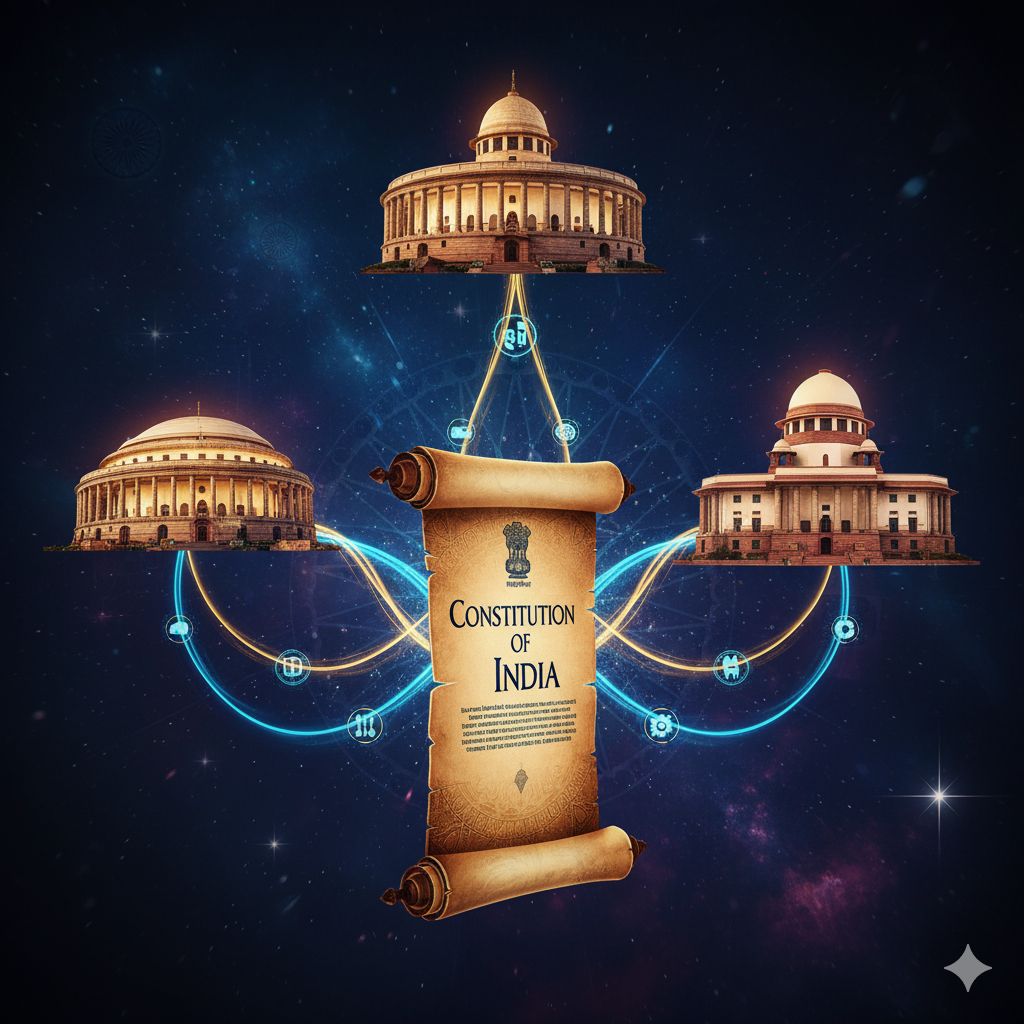
The petitioner, Manoj Narula, used Article 32 and asked the Supreme Court to stop the appointment of ministers who had serious criminal charges. The key problem was that the Constitution is silent on this point. Articles 75 and 164 say who appoints ministers, but they do not talk about criminal background.
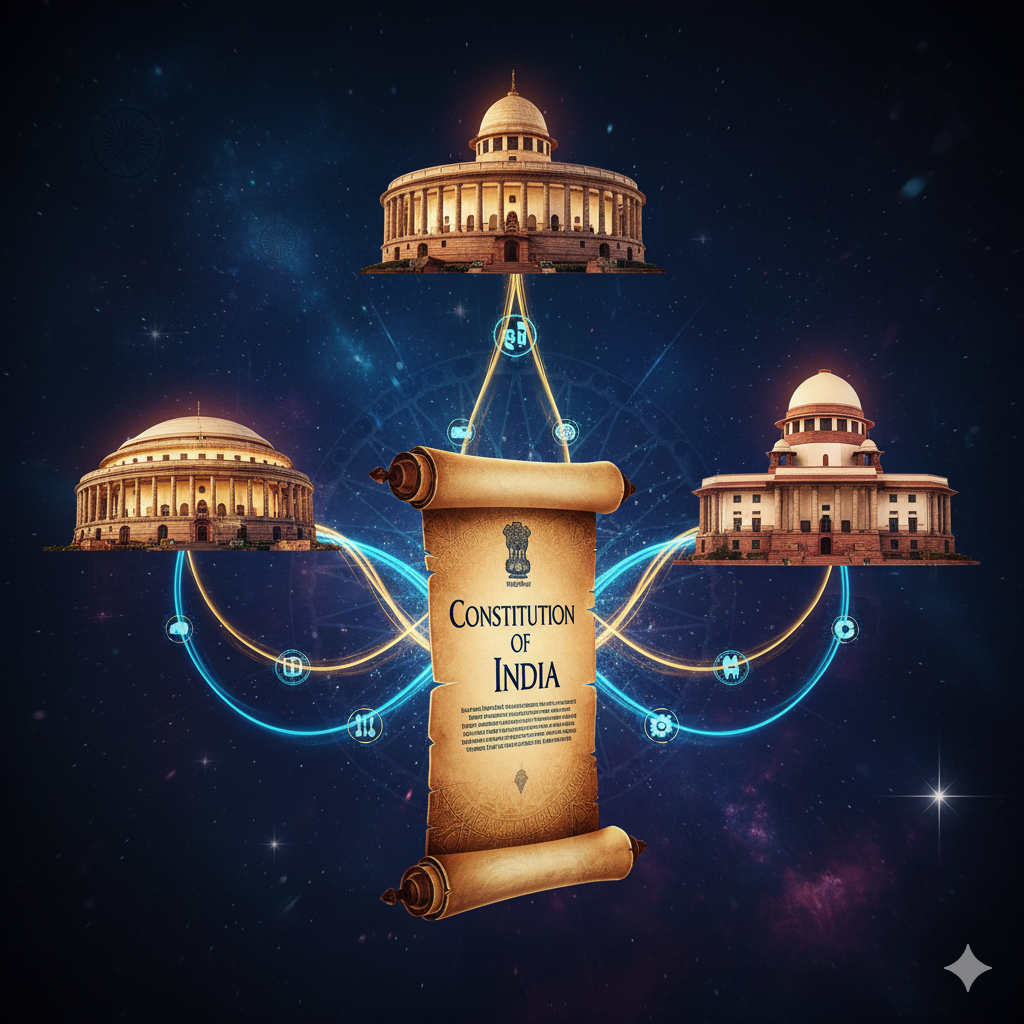
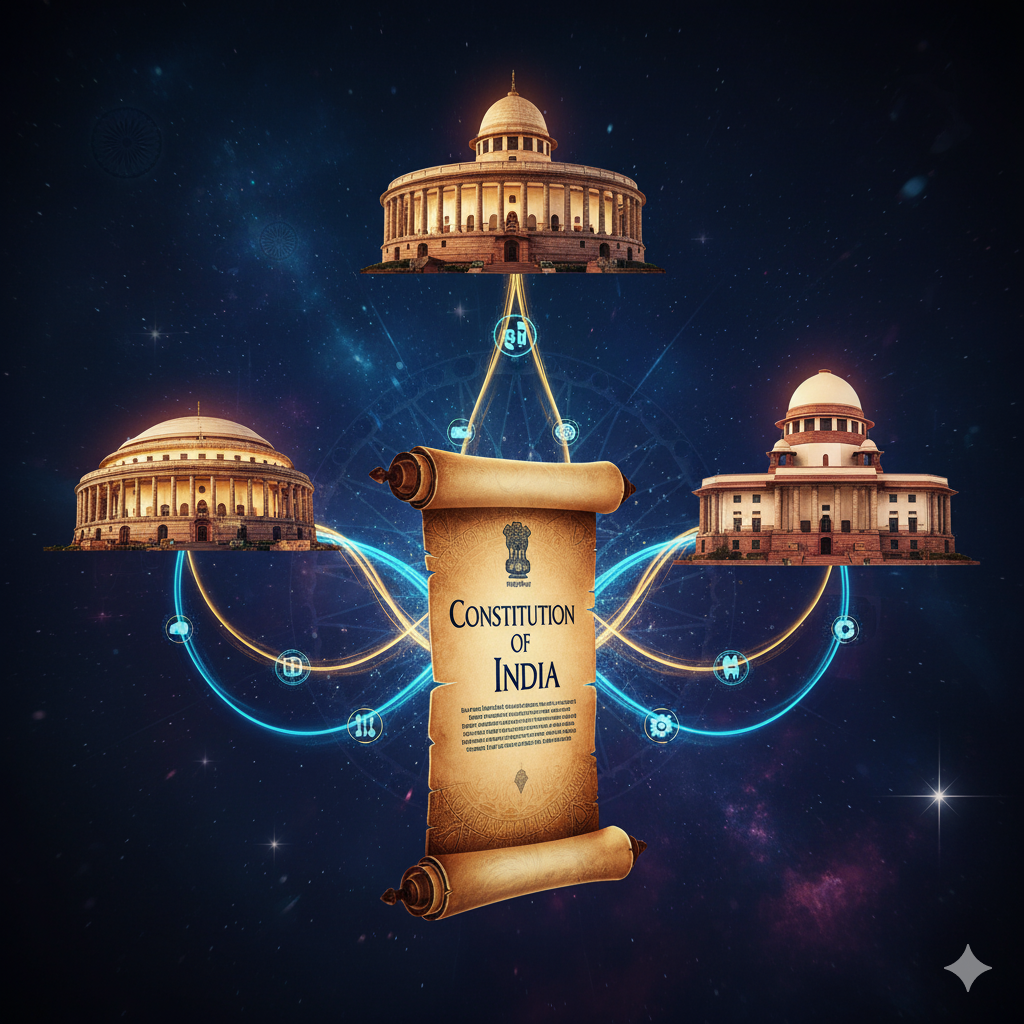
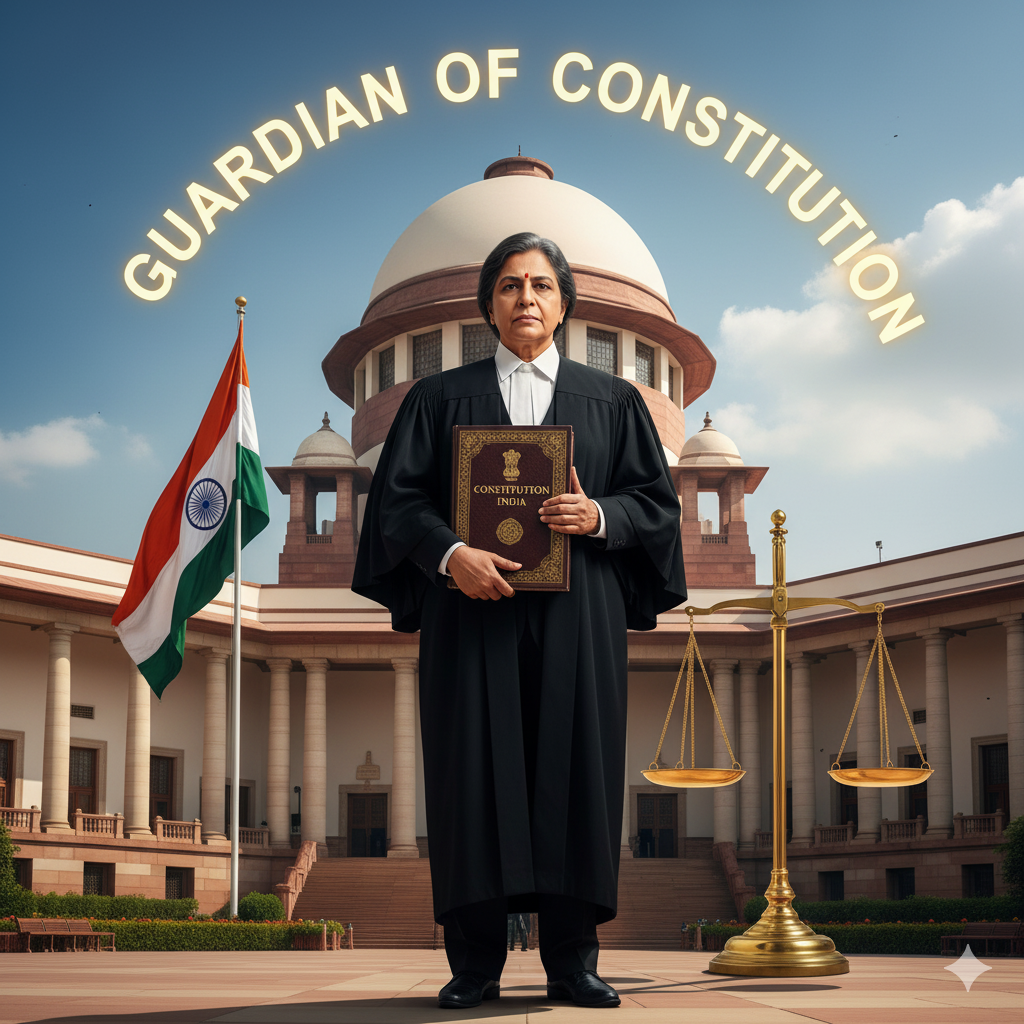
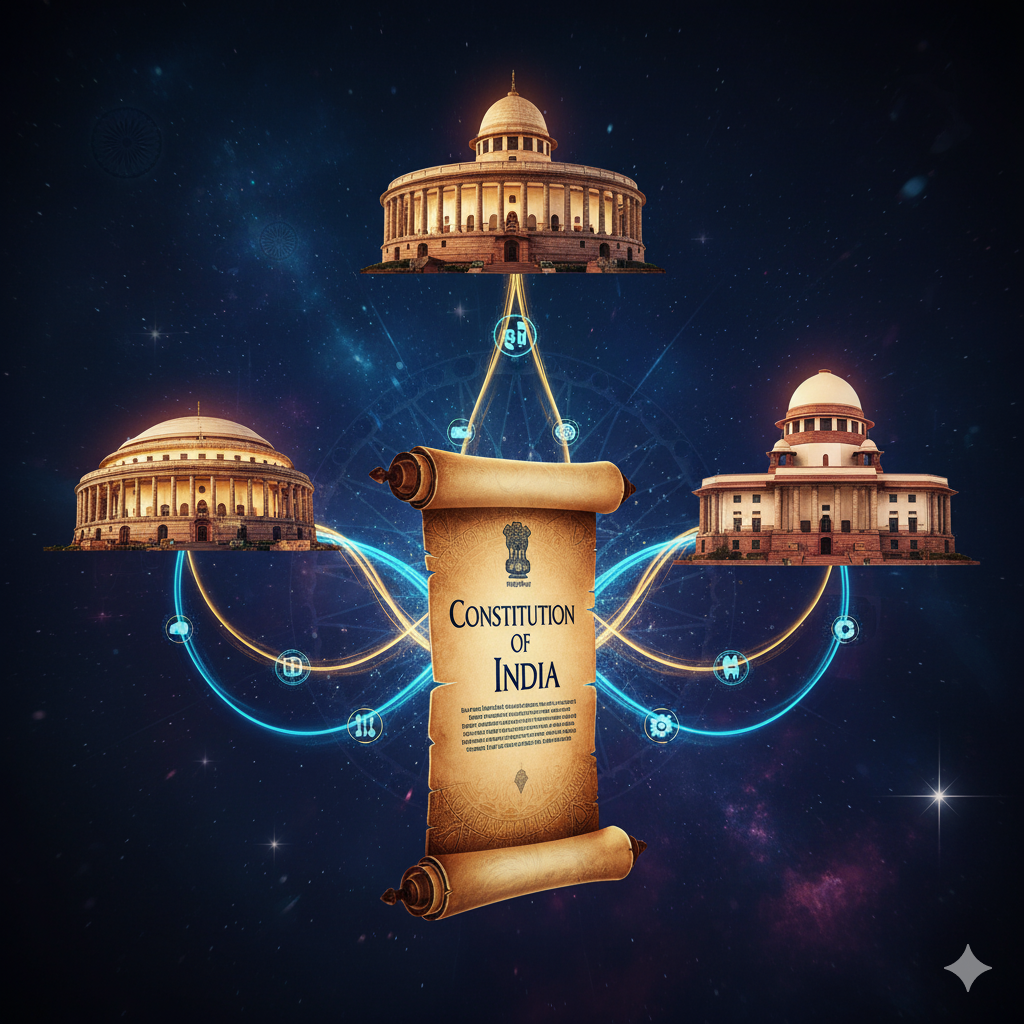
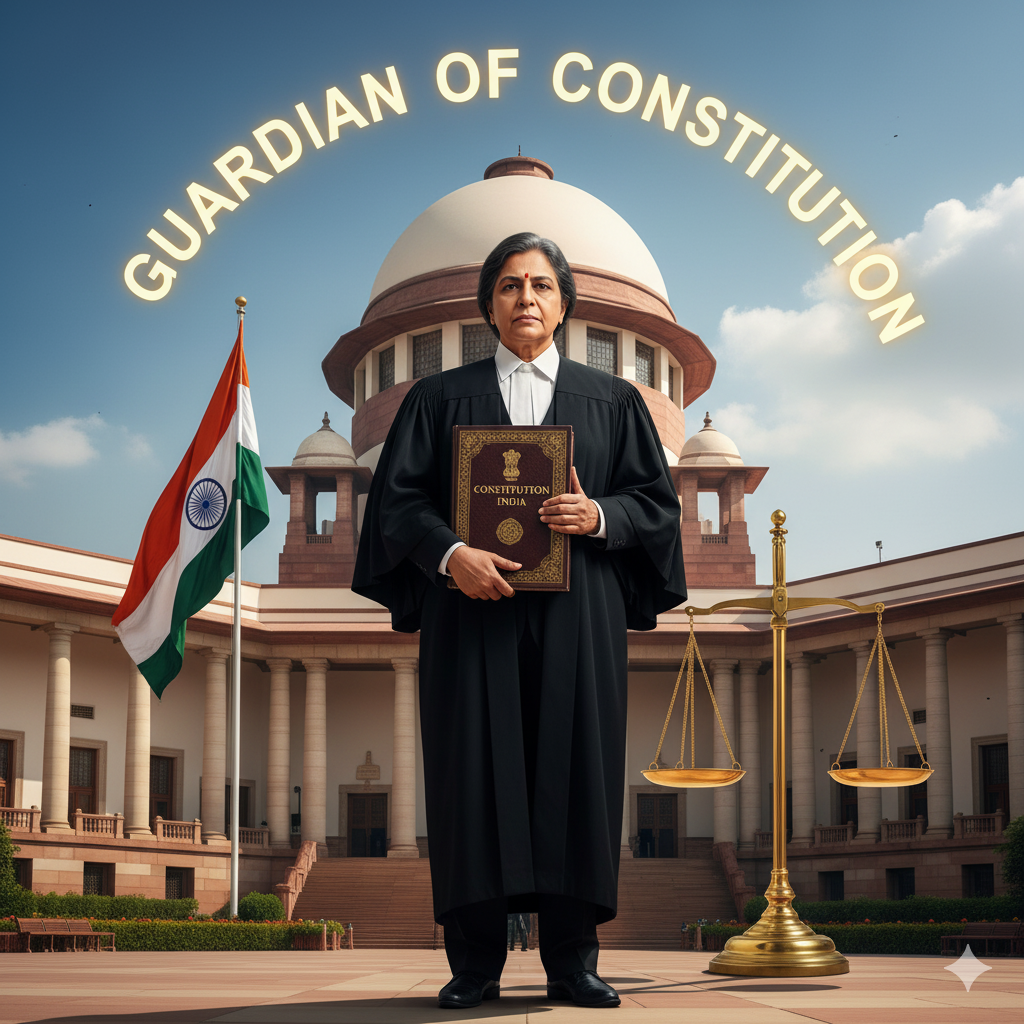
The Supreme Court finally said: courts cannot add a new disqualification that the Constitution or Parliament has not written. At the same time, the Court gave a very strong message. The Prime Minister is a constitutional trustee and is expected to avoid appointing people with serious criminal cases as ministers, in the name of constitutional morality and good governance.
No new legal disqualification, but a very strong moral and constitutional advice to the Prime Minister: keep persons with serious criminal charges out of the Council of Ministers.
Use this case for topics like criminalisation of politics, constitutional morality, good governance, implied limitations and constitutional silence.
Legal Issues
- Whether a person who is facing serious criminal charges can be appointed as a Minister in the Union or State government.
- Whether the Supreme Court can read an implied prohibition into Article 75(1) (and by extension Article 164) to stop the Prime Minister or Chief Minister from advising the appointment of such persons as ministers.
- Whether adding such a prohibition by judicial interpretation would amount to creating a new disqualification beyond Articles 84, 102 and the Representation of the People Act, 1951.
Rules & Legal Principles
Constitutional Provisions
- Article 75(1): Prime Minister is appointed by the President; other Ministers are appointed by the President on the advice of the Prime Minister.
- Article 164(1): Governor appoints the Chief Minister and other Ministers on the advice of the Chief Minister at the State level.
- Article 84 & 102: Lay down qualifications and disqualifications for Members of Parliament (for example, disqualification on conviction, unsoundness of mind, holding an office of profit).
Statutory Provision
- Representation of the People Act, 1951 – Section 8: Provides disqualification on conviction for certain offences. In general, it focuses on people who have already been found guilty, not those who are only facing trial.
Key Doctrines
- Presumption of Innocence: An accused person is treated as innocent until the court convicts them after trial.
- Constitutional Silence: Sometimes the Constitution is silent on a point. That silence does not always mean that courts can fill the gap; often it is for Parliament or the political process to act.
- Doctrine of Implied Limitations: Courts may read implied limits into powers to protect the basic structure, but this power has clear boundaries and cannot be used to freely add new conditions everywhere.
- Good Governance & Constitutional Morality: Government actions should respect public trust, rule of law and integrity in public office.
Facts – Timeline Style
Step-by-step eventsBackground
Some people who were facing serious and heinous criminal charges were appointed as Ministers in the Union Government. This raised concern about the criminalisation of politics and the quality of governance.
Filing of Petition
Public interest litigant Manoj Narula filed a writ petition under Article 32 before the Supreme Court. He challenged the appointment of such ministers and argued that it goes against public interest and constitutional values.
Reference to Larger Bench
The matter first came before a Bench headed by the Chief Justice in 2006. Because the case involved the correct interpretation of Articles 75 and 164, it was referred to a Constitution Bench for an authoritative answer.
Broader Debate
During the hearing, the Court received assistance from the Amicus Curiae and heard arguments about:
- Criminalisation of politics
- Public expectation of clean governance
- The trust placed in the Prime Minister and Chief Minister
- The limits of judicial power in a democracy
Focus of the Case
The Court had to decide whether it should itself draw a line and legally bar such appointments, or whether that decision has to be left to political wisdom and parliamentary law-making.

Use this space in class to act out the timeline: petitioner, Prime Minister, President and the Supreme Court as different roles.
Arguments – Petitioner vs. Union of India
Petitioner & Amicus Curiae
- The Prime Minister has a constitutional duty not to recommend the appointment of persons with serious criminal charges as ministers.
- The Constitution is not only about black-letter rules; it also has unwritten moral standards like integrity, public trust and constitutional morality.
- When the Constitution is silent, the Court can use interpretation to fill the gap in the interest of democracy and good governance.
- People have a right to be governed by clean ministers, especially in a country where criminalisation of politics is a known problem.
- The Prime Minister’s advice to the President is not a private choice; it is subject to constitutional trust and must respect basic values.
Union of India & Opposing View
- The Constitution and the Representation of the People Act already list disqualifications. Courts cannot add new ones through interpretation.
- A person who is only facing trial is still protected by the principle of presumption of innocence.
- If Parliament thinks criminal cases should bar ministers, it can pass a law. Courts should not enter this political field.
- Too much judicial interference would disturb the separation of powers and could be seen as judicial overreach.
- Voters and political parties should take political responsibility for such choices; courts cannot micro-manage cabinet formation.
Judgment & Court’s Reasoning
Law vs. EthicsJustice Dipak Misra – Majority Reasoning
- Article 75(1) does not list criminal background as a disqualification. If the Court adds such a bar, it would in effect be writing a new clause into the Constitution.
- The doctrine of implied limitations is mainly used to protect the basic structure. It cannot be used freely to add new disqualifications where the text is clear.
- The idea of constitutional silence does not automatically give power to courts to fill every gap. Sometimes, silence is meant to give space to the political process and Parliament.
- At the same time, the Court strongly underlined the need for good governance. Public interest, clean administration and accountability are central values.
- The Court used the maxim “Salus populi suprema lex” – the welfare of the people is the supreme law – and reminded the Prime Minister of his position as a constitutional trustee.
Justice Madan Lokur – Concurring View
- To become a minister, a person must be or must soon become a Member of Parliament; therefore, Articles 84 and 102 and the Representation of the People Act apply.
- The Representation of the People Act already gives detailed rules on disqualification on conviction. Courts should respect this legislative choice.
- An FIR, complaint or chargesheet does not mean a person is guilty. Only a conviction after proper trial can change their legal status.
- Although criminalisation of politics is a serious concern, the remedy lies with Parliament and political leadership, not in judicial law-making.
Final Holding
- The writ petition was disposed of. The Court did not create a binding legal bar on appointing ministers with pending criminal cases.
- However, the Court clearly expressed that the Prime Minister is expected to act in line with constitutional morality and not include persons with serious criminal charges in the Council of Ministers.
- Thus, the decision draws a line between law and ethics: no new legal rule, but a strong ethical and constitutional message to political actors.

Ratio Decidendi
The core ratio of this case can be captured in one sentence:
Courts cannot create a new legal disqualification for ministers on the ground of pending criminal cases, but the Prime Minister, as a constitutional trustee, is expected to respect constitutional morality and avoid appointing such persons.
- Articles 75 and 164, read with Articles 84 and 102 and the Representation of the People Act, form a complete code for qualifications and disqualifications.
- Presumption of innocence and separation of powers do not permit the Court to add new disqualifications based only on charges or trials.
- Nonetheless, constitutional morality and good governance place a strong normative burden on the Prime Minister in selecting ministers.
Why This Case Matters
- It is a key authority on criminalisation of politics, especially on how far courts can go to keep tainted people out of government.
- It clarifies the difference between legal disqualification and ethical expectation in constitutional law.
- It deepens the concept of constitutional morality and good governance as guiding ideas for the Prime Minister’s decisions.
- For students, it gives a neat example of the limits of judicial activism and the importance of separation of powers.
- It frequently appears in discussions and exam questions related to cabinet formation, Article 75, and political accountability.
Key Takeaways for Students
Exam revision- No new disqualification: The Court refused to add a bar on ministers with criminal cases into Article 75 or 164.
- Prime Minister as trustee: The decision underlines the PM’s duty to respect constitutional morality when choosing ministers.
- Presumption of innocence remains central. Mere charges or FIRs cannot automatically disqualify a person.
- Parliament’s role is primary in deciding who is disqualified from fighting elections and holding office.
- Judicial restraint: The Court drew a clear line and avoided stepping into pure political questions.
- Use in answers: Cite this case whenever you write about criminalisation of politics, ministerial responsibility or constitutional morality.
Mnemonic & 3-Step Memory Hook
“CLEAN PM”Mnemonic: CLEAN PM
- C – Criminal cases do not automatically bar ministers.
- L – Legal limits on Court: no new disqualification can be created.
- E – Ethical expectation from the Prime Minister.
- A – Article 75 about appointment of ministers.
- N – Norm of good governance and constitutional morality.
- P – Parliament decides disqualifications through law.
- M – Manoj Narula raises criminalisation of politics.
3-Step Hook for Exam Recall
- Picture the scene: Imagine the Prime Minister standing at Rashtrapati Bhavan with a list of ministers. Some names have a big red “CRIMINAL CASE” stamp on them.
- Hear the question: Supreme Court is asked, “Can we legally stop these names?” The Court replies, “Law cannot, but you, Prime Minister, should act responsibly.”
- Say the line: “No new legal bar, but a CLEAN PM is a constitutional expectation” – and recall the mnemonic CLEAN PM.
IRAC Outline (Issue–Rule–Application–Conclusion)
- Issue: Can the Court prevent the appointment of ministers who are facing serious criminal charges by reading an implied prohibition into Article 75(1)/Article 164?
- Rule: Articles 75, 164, 84, 102 of the Constitution; Section 8 of the Representation of the People Act, 1951; doctrines of presumption of innocence, constitutional silence, implied limitations and good governance.
- Application: The Court noted that the Constitution and the statute already give a full list of disqualifications. Adding a new one based only on pending cases would go beyond interpretation and enter the field of law-making. However, the Court used constitutional morality, public trust and the doctrine of good governance to shape a strong expectation from the Prime Minister as a constitutional trustee.
- Conclusion: The Supreme Court refused to create a legal bar on such appointments but declared that the Prime Minister is expected, in the spirit of the Constitution, not to include persons facing serious criminal charges in the Council of Ministers.
Glossary – Important Terms from the Case
- Criminalisation of Politics
- Trend where people with criminal backgrounds enter politics, contest elections and sometimes become ministers.
- Constitutional Morality
- The idea that all actors, especially high constitutional functionaries, must act in a way that respects the values and spirit of the Constitution, not just its bare text.
- Constitutional Silence
- When the Constitution does not expressly speak on a particular situation, leaving space for political practice or parliamentary law-making.
- Implied Limitations
- Limits that are not written in the text but are read by courts to protect the basic structure of the Constitution or to prevent misuse of power.
- Presumption of Innocence
- Criminal law principle that an accused is considered innocent until proven guilty by a court of law after a fair trial.
- Council of Ministers
- Group of the Prime Minister and other ministers who collectively run the affairs of the Union Government.
- Constitutional Trustee
- A person like the Prime Minister who holds power on behalf of the people and is expected to exercise it in line with constitutional values and public trust.
- Disqualification
- A legal condition that prevents a person from contesting elections or holding a particular public office, such as conviction for certain offences.
Student-Friendly FAQs
Simple answer: legal level par nahi. Court ne koi naya rule create nahi kiya. Agar kisi vyakti ke upar sirf criminal case chal raha hai, aur wo Representation of the People Act ke hisaab se disqualified nahi hai, toh wo election lad sakta hai aur Minister bhi ban sakta hai. Lekin moral level par Court ne clear message diya ki PM ko aise logon ko avoid karna chahiye.
Kyunki agar Court Article 75(1) mein ek extra disqualification add kar deta, toh ye judicial overreach hota. Ye kaam Parliament ka hai. Court ne isliye judicial restraint dikhaya – law change nahi kiya, bas ek strong constitutional expectation express kiya.
Jab bhi aap criminalisation of politics, ministerial responsibility, constitutional morality ya limits of judicial power pe answer likh rahe ho, ek short line likhiye: “In Manoj Narula v. Union of India (2014), the Supreme Court refused to add a new disqualification for ministers but strongly reminded the Prime Minister to keep persons with serious criminal charges out, in the name of constitutional morality and good governance.”






























































Popular & Recent Post


































Comment
Nothing for now