

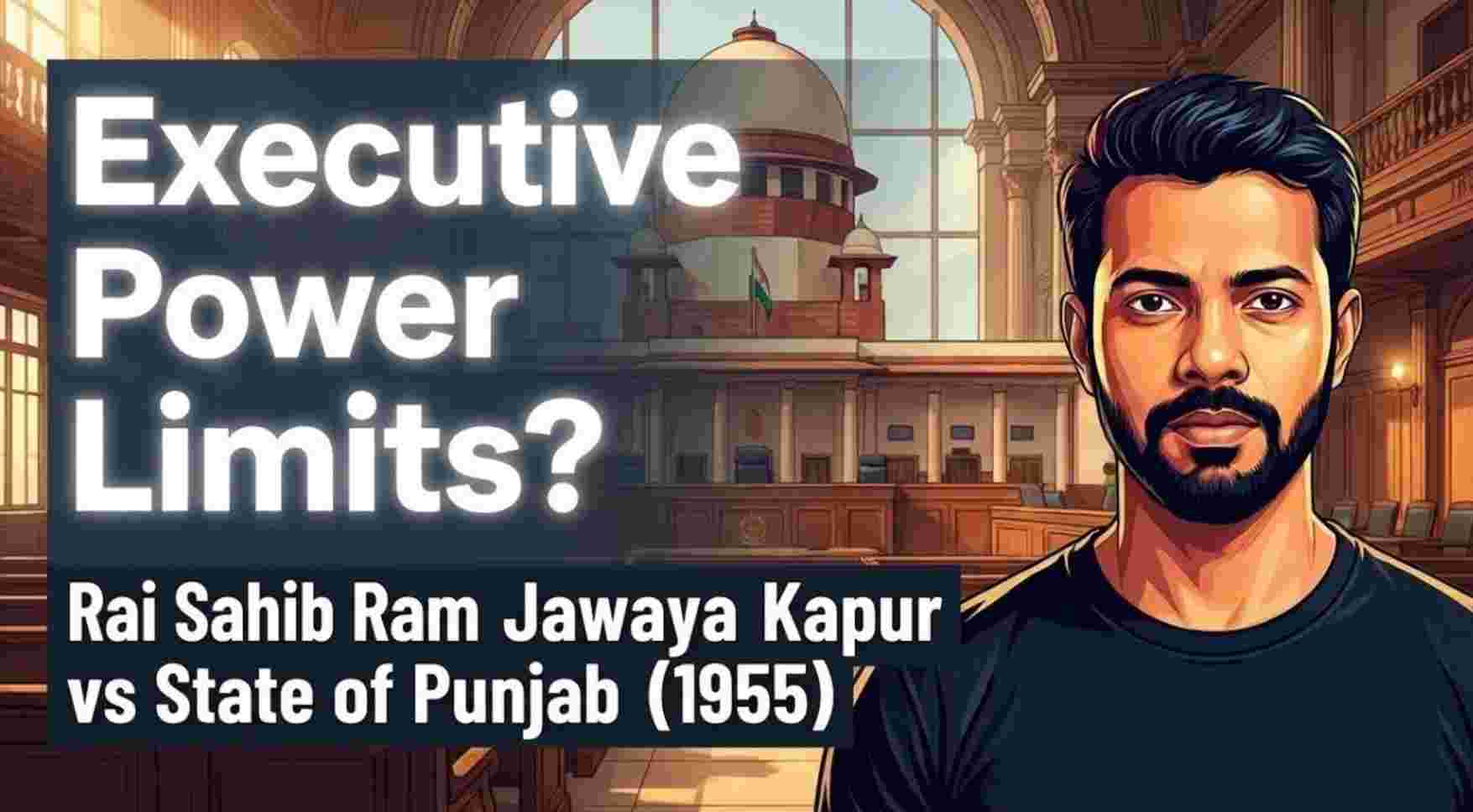
Rai Sahib Ram Jawaya Kapur v. State of Punjab (1955)
Executive power, textbook monopoly and the real meaning of trade freedom under Article 19(1)(g) — explained in calm, classroom-style English.
Slug: rai-sahib-ram-jawaya-kapur-v-state-of-punjab-1955 · Publish date: 07 December 2025 · Location: India

Video Explainer (YouTube)
Quick Summary
This case is about how far the executive government can go without a specific law passed by the legislature, and whether such executive action can cut into citizens’ right to carry on business under Article 19(1)(g).
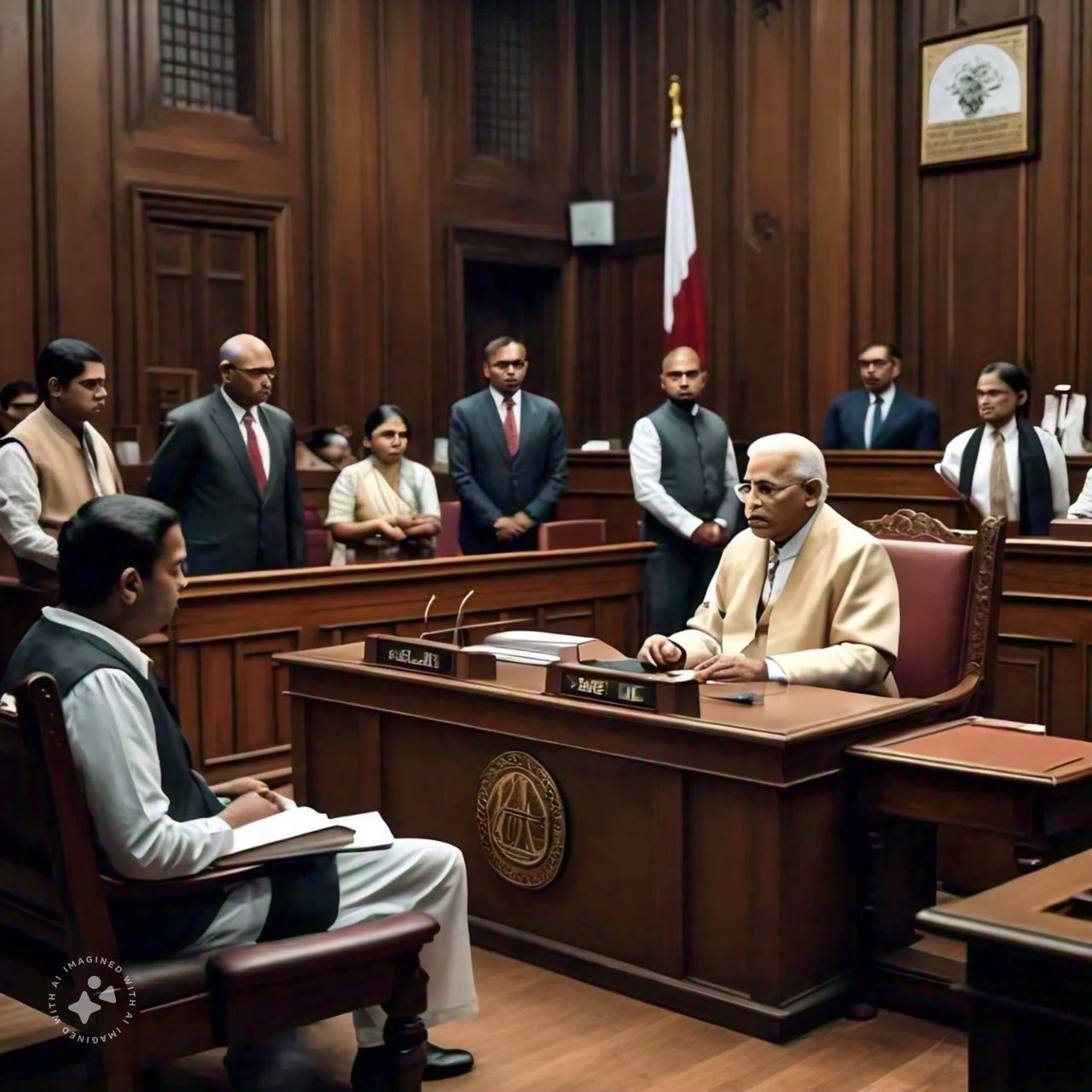
A group of private publishers from Punjab were printing and selling school textbooks. The Punjab Government later started a textbook policy under which the Government itself controlled which books would be written, printed and supplied to schools. Because of this, the publishers were almost pushed out of the school textbook market and they approached the Supreme Court.
They argued that the Government, only by issuing executive orders, could not create a kind of monopoly and destroy their business freedom. The Supreme Court held that the executive is fully bound by the Constitution, but in this case the publishers’ fundamental right under Article 19(1)(g) was not violated, because they never had a right to demand that the Government must choose their books as official textbooks.
Issues Before the Court
- Can the executive Government, without a specific statute, create a practical monopoly in the field of school textbooks?
- Does the Punjab textbook policy amount to an unreasonable restriction on the publishers’ fundamental right to carry on trade or business under Article 19(1)(g)?
- What is the extent of executive power in India, especially in relation to the legislative power of the State?
- Is every illegal executive act automatically a violation of fundamental rights so that a petition under Article 32 will lie?
Rules & Constitutional Provisions
- Article 19(1)(g): Guarantees to all citizens the right to practice any profession, or to carry on any occupation, trade or business.
- Article 19(6): Allows the State to impose reasonable restrictions on this right by law, including creating State monopolies in certain areas.
- Articles 73 and 162: Describe the extent of executive power of the Union and the States. Executive power extends to matters on which the legislature can make laws, subject to the Constitution and existing statutes.
- Article 32: Constitutional remedy to move the Supreme Court directly when a fundamental right is violated.
The Court also relied on the basic idea that in a written Constitution like India’s, neither the legislature nor the executive can override fundamental rights. The executive must act within the four corners of the Constitution and valid laws.
Facts – Timeline Style
Publishers’ business
Six petitioners formed a firm named Uttar Chand Kapur & Sons. They were engaged in printing, publishing and selling school textbooks, especially for primary and middle school classes in Punjab.
Government textbook policy
Around 1950, the Punjab Government introduced a policy for the nationalisation and control of school textbooks. Under this policy, the Government decided which textbooks would be prepared, who would print them and how they would be distributed.
Executive notifications
The Government issued several notifications. These had the practical effect that private publishers could no longer get their books approved as prescribed textbooks for government schools.
Economic impact on petitioners
Because schools now followed only Government-approved books, the petitioners’ main business source dried up. They felt that they had been almost driven out of the textbook market.
Constitutional challenge
The publishers approached the Supreme Court under Article 32. They argued that the executive orders, without any supporting legislation, placed unconstitutional restrictions on their freedom to carry on trade under Article 19(1)(g).
Relief sought
They asked for a writ of mandamus directing the Punjab Government to withdraw its notifications and to stop enforcing the textbook policy that affected their business.

Arguments – Appellants vs. State
Petitioners (Publishers)
- The executive cannot, by itself, create a monopoly in textbook production without a law passed under Article 19(6).
- Their right to carry on business in textbooks under Article 19(1)(g) had been effectively taken away.
- There was no valid statute authorising the Government’s textbook scheme. Only executive orders had been used.
- The policy pushed them out of the school textbook field and therefore amounted to an unreasonable and unconstitutional restriction.
Respondent (State of Punjab)
- The State is free to organise its own educational policy and to decide which textbooks are suitable for schools.
- No law requires that the Government must accept books from all private publishers as prescribed textbooks.
- The publishers are still free to print and sell books in the open market; they only lost the chance to have their books selected for schools.
- A financial or commercial loss is not automatically a violation of a fundamental right.
Judgment of the Court
The Supreme Court dismissed the petition. It clarified that the executive is fully controlled by the Constitution and cannot override fundamental rights. However, in this particular situation, the Court held that there was no violation of Article 19(1)(g).
The Court observed that the publishers had a right to carry on the trade of printing and selling books. But they did not have a fundamental right to insist that the Government must select their books as official textbooks for schools. The loss of a profitable government-linked market, by itself, did not amount to a denial of their freedom to trade.
The Court also explained that not every illegal or doubtful executive action gives rise to an Article 32 remedy. Only when a fundamental right is actually infringed can a person directly approach the Supreme Court under Article 32.

Ratio Decidendi
- Extent of executive power: Executive power normally extends to all matters on which the legislature can make laws. The executive can act, so long as there is no law prohibiting such action and the Constitution is not violated.
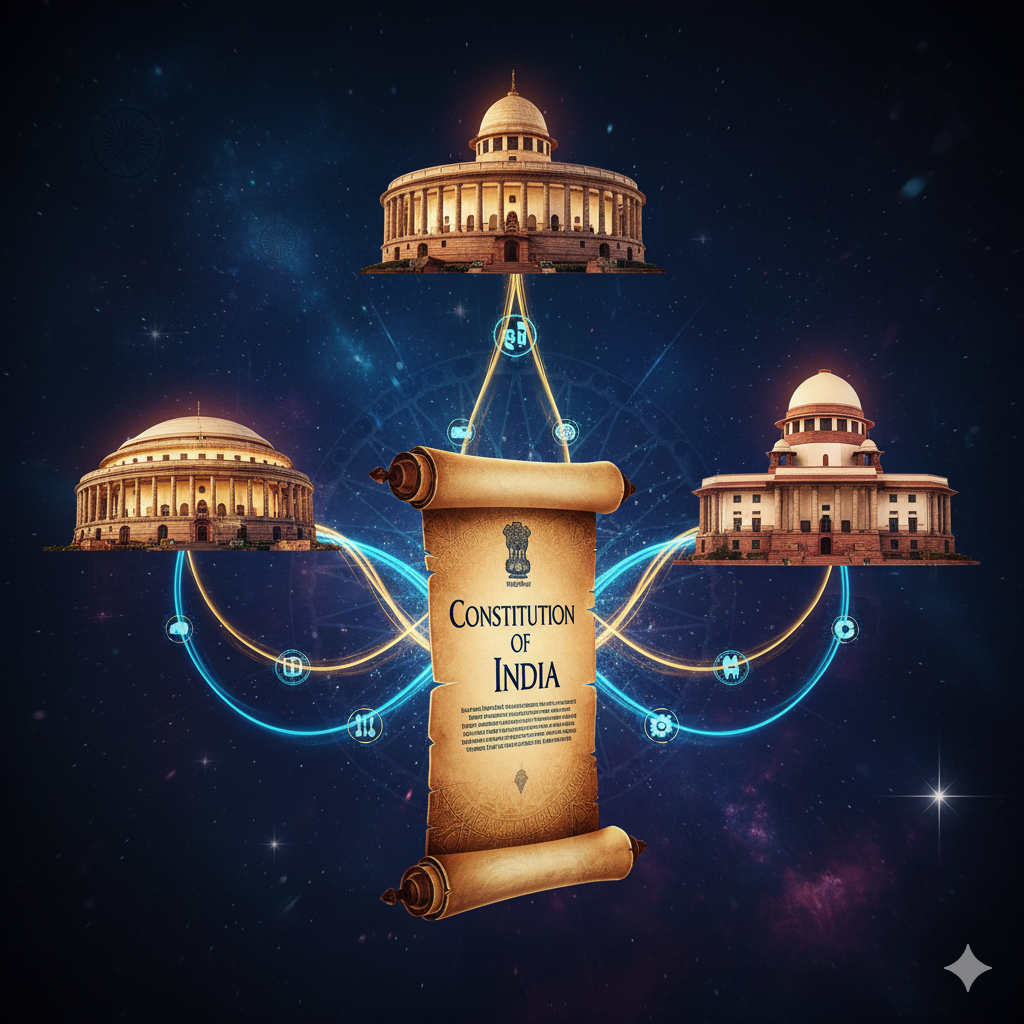
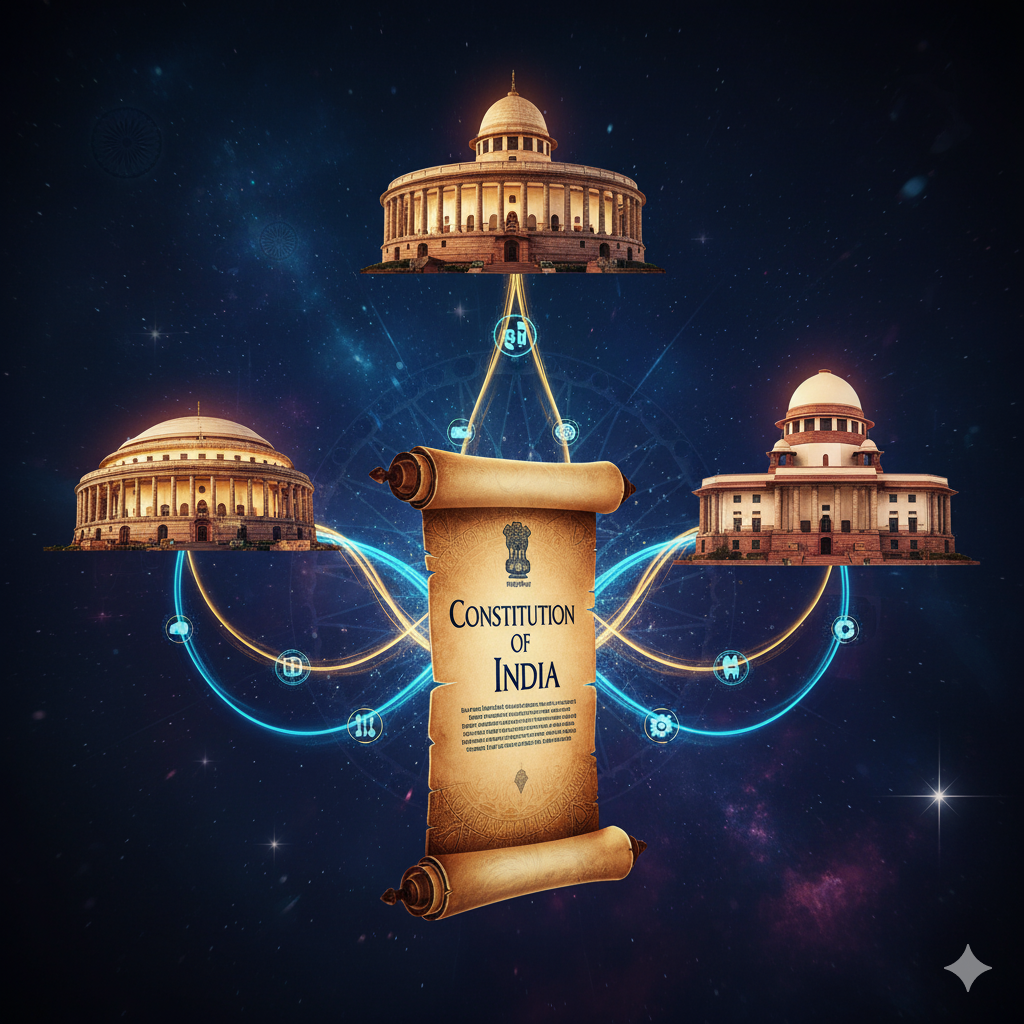
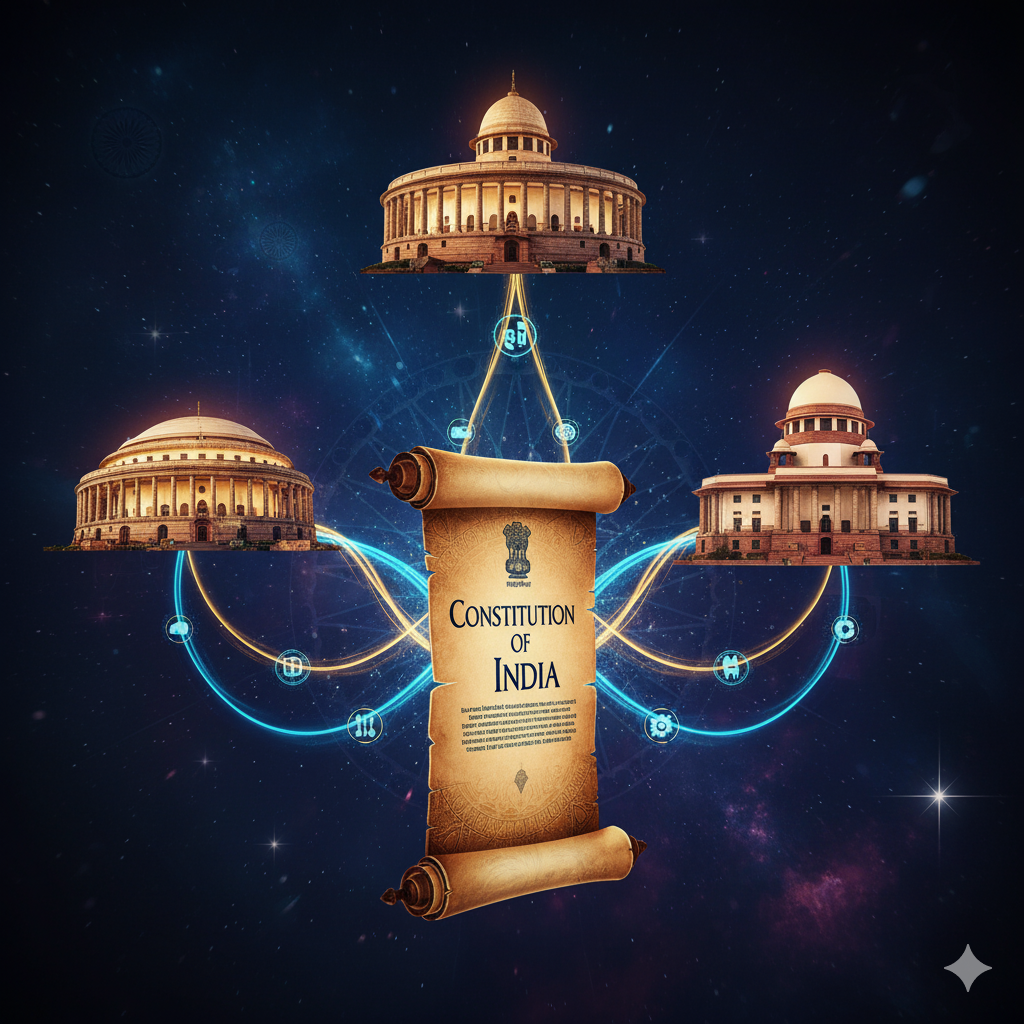
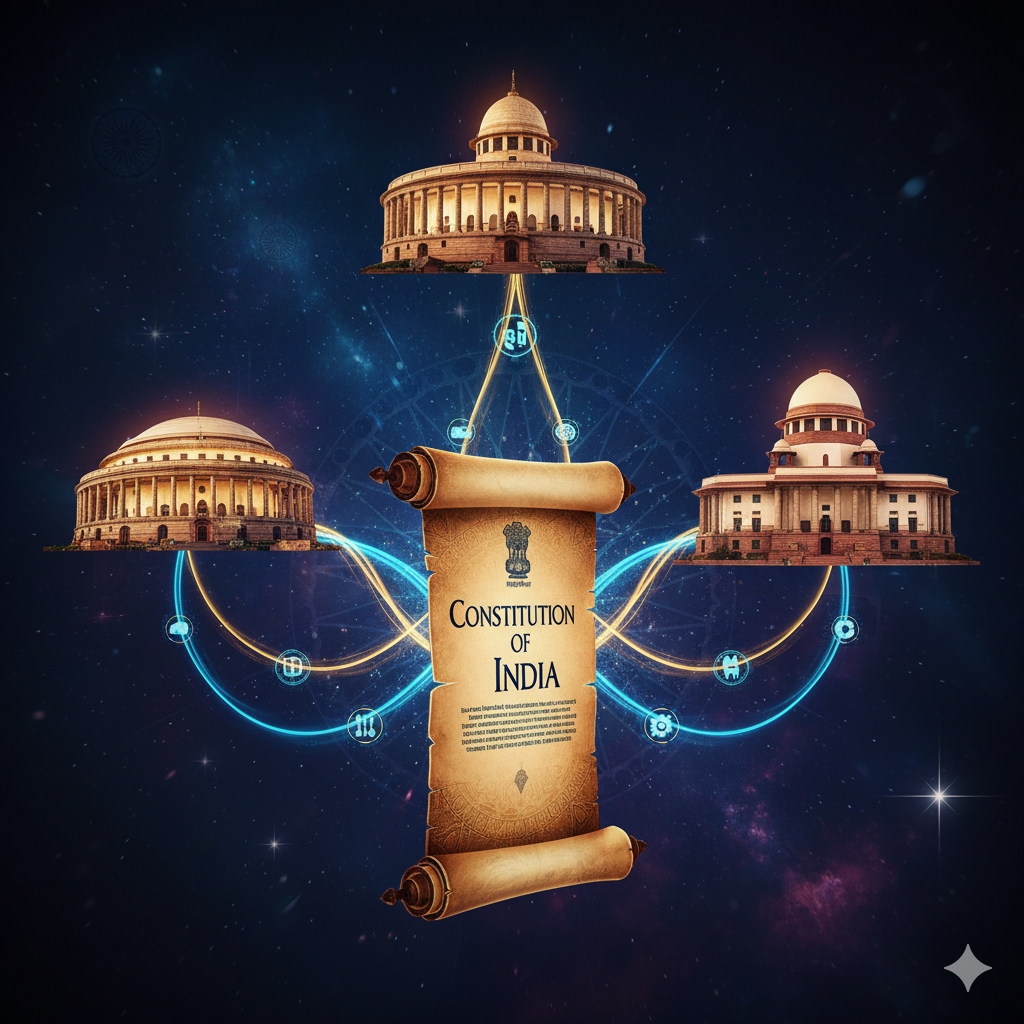
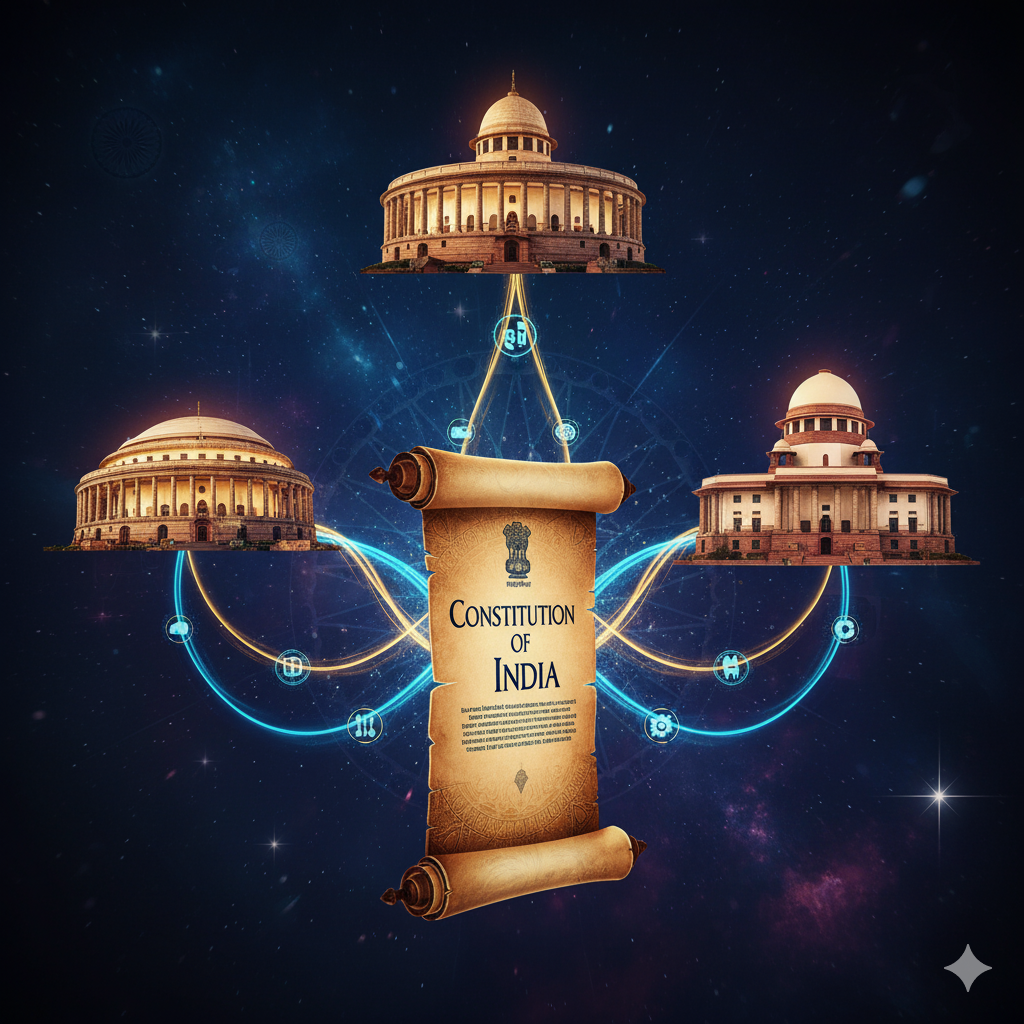
- No strict separation of powers: The Indian Constitution does not enforce a rigid separation between the legislature and the executive. However, both are controlled by constitutional limits and fundamental rights.
- Right to trade vs. right to be selected: Article 19(1)(g) gives citizens the freedom to carry on trade or business. It does not give a guarantee that the State must buy their goods or select their products for government use.
- Article 32 and illegality: An executive act may be wrongful or unwise, but Article 32 is available only if it also violates a fundamental right. Mere illegality is not enough for a constitutional remedy under Article 32.
Why This Case Matters
For law students, Rai Sahib Ram Jawaya Kapur is a must-know case because it clearly explains how executive power works in India and how it is limited by the Constitution.
- It shows that the executive can take many policy decisions, even without a specific statute, as long as it does not break any existing law or fundamental right.
- It clarifies that economic disadvantage caused by a government policy is not always a fundamental rights violation.
- It is frequently used in exams to explain the relationship between executive power, legislative power and Article 19(1)(g).
- It is also important when discussing separation of powers and checks and balances in the Indian constitutional system.
Key Takeaways for Students
- Executive power is wide, but it is not unlimited; it is always under the Constitution and existing laws.
- Article 19(1)(g) protects your freedom to do business, not your guarantee to get government contracts or official selections.
- A government policy can be harsh or commercially damaging, yet still be constitutionally valid.
- Article 32 can be used only when there is a clear violation of a fundamental right, not for every wrong executive action.
- India follows a balanced system of powers: no strict separation, but strong constitutional control over each organ.
- This case is a standard citation whenever you write about extent of executive power in constitutional law answers.
Mnemonic + 3-Step Exam Hook
Use this simple memory tool to lock the case in your head during exams.
- RAM → Ram Jawaya (name of the case)
- TEXTS → Textbook policy of Punjab Government
- FREE? → Question: Is trade freedom under Article 19(1)(g) affected?
3-Step Exam Hook
- Step 1 – Start with the scene: “In Rai Sahib Ram Jawaya Kapur, private publishers challenged Punjab’s Government textbook policy…”
- Step 2 – Drop the issue: “They argued that the executive cannot create a monopoly and destroy their trade freedom under Article 19(1)(g) without a supporting law.”
- Step 3 – Finish with the ratio: “The Supreme Court held that executive power is wide but controlled by the Constitution, and the publishers had no fundamental right to demand that their books be used as official textbooks.”
IRAC Outline (Issue–Rule–Application–Conclusion)
Glossary – Simple Words
- Executive power
- Power of the Government to run administration, make policies and take decisions, as different from making laws (legislature) or deciding cases (judiciary).
- Monopoly
- A situation where only one seller controls the whole market for a particular product or service.
- Article 19(1)(g)
- Fundamental right that lets a citizen carry on any trade, business, profession or occupation, subject to reasonable restrictions.
- Article 32
- Provision that allows a person to directly move the Supreme Court when a fundamental right is violated.
- Reasonable restriction
- A fair and balanced limit placed by law on a fundamental right, which the courts accept as justified in public interest.
- Separation of powers
- Constitutional idea that law-making, law-executing and law-interpreting functions should be placed in different organs so that power is not concentrated in one hand.
FAQs – Student Doubts
















































Popular & Recent Post




























Comment
Nothing for now