

Khan Gul v. Lakha Singh, AIR 1928 Lah. 609
```
Quick Summary
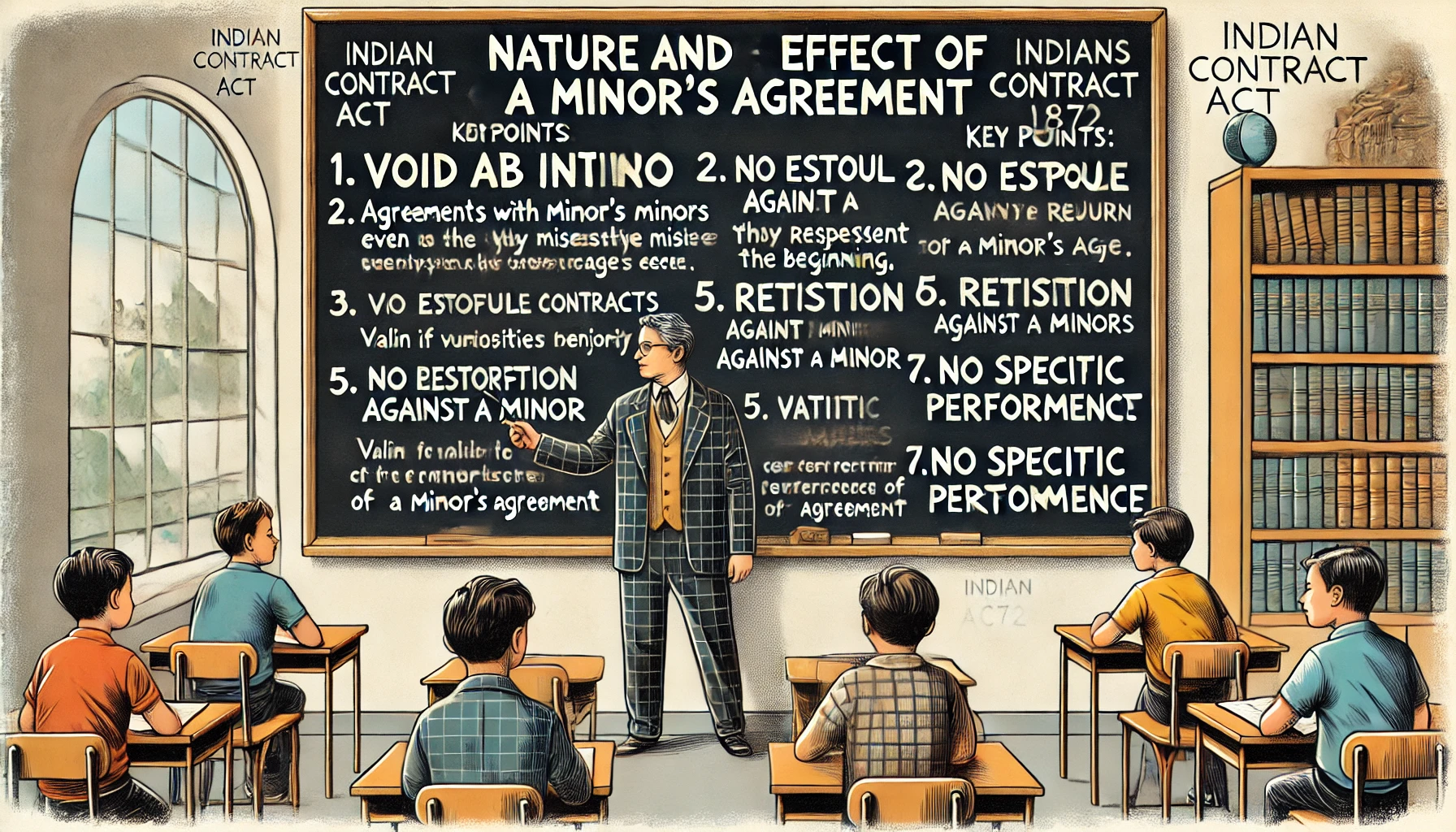
The case explains what happens when a minor lies about age and enters a contract. The agreement is void, so the minor is not liable under the contract. But the court may order equitable restitution so the minor does not keep unfair benefits.
- Estoppel does not block a minor from pleading minority.
- Restitution may require the minor to restore gains still held.
- Protects minors, but also prevents unjust enrichment.
Issues
- Can a minor who falsey claims majority later plead minority to avoid the contract?
- Can that minor keep the benefits gained under the void agreement?
Rules
- Section 11, ICA: Only competent persons can contract; a minor’s agreement is void.
- No estoppel against minority: False representation of age does not create capacity.
- Equitable restitution: Courts may require return of benefits to prevent unjust enrichment.
Facts (Timeline)

Defendant No.1, a minor, negotiated sale of land to the plaintiff while hiding his true age.
Total price: ₹17,500 — ₹8,000 in cash at Sub-Registrar; ₹9,500 by promissory note on demand.
As asked by D1, the ₹9,500 note was discharged and replaced by a note to Muhammad Hussain (brother-in-law).
Plaintiffs paid ₹5,500 to Muhammad Hussain; ready to pay the rest.
D1 refused to execute transfer despite receiving consideration.
Plaintiffs sought possession or a decree for ₹17,500 plus interest/damages (1% p.m.), totalling ₹19,000.
Arguments
Appellant / Plaintiffs
- Full consideration was paid or secured as directed by D1.
- D1’s refusal amounts to breach; possession or refund with interest is due.
- Equity should prevent D1 from keeping money and land.
Respondent / Defendants
- D1 was a minor; the agreement is void for want of capacity.
- Estoppel cannot create capacity where law denies it.
- Contractual remedies do not apply against a minor.
Judgment
The Court held that a minor’s agreement is void. A minor who lied about age is not bound by the contract and is not estopped from pleading minority. However, to prevent unjust enrichment, the court can order restitution—return of benefits still in the minor’s hands or traceable to the transaction.
Ratio Decidendi
- No capacity, no contract: Section 11 ICA makes the agreement void.
- No estoppel against minority: A false claim of age cannot create liability.
- Equity steps in: Restitution avoids the minor’s unjust gain while keeping protection for minors.
Why It Matters
The case shows the balance in contract law: minors are protected from liability, yet the law also stops them from keeping benefits unfairly. For exams, connect capacity + estoppel + restitution.
Key Takeaways
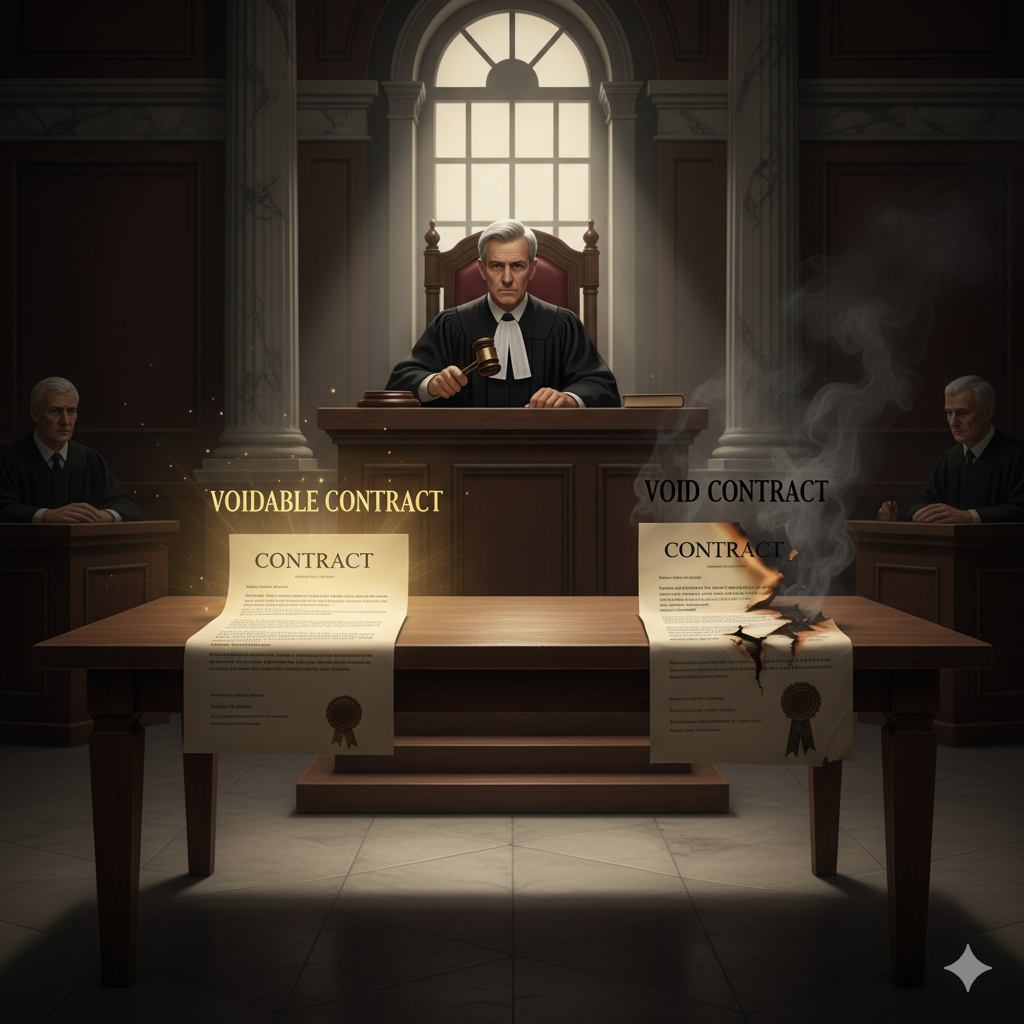
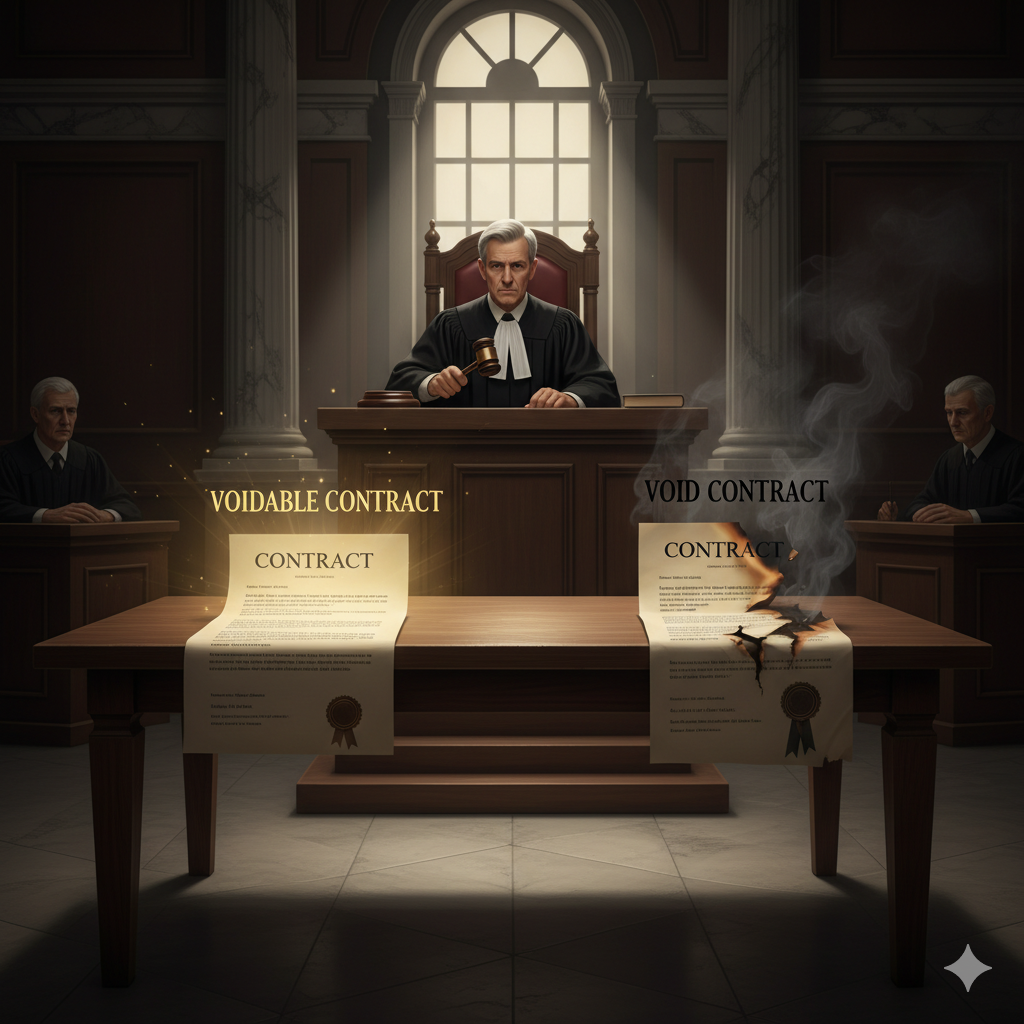
- Minor’s contract is void—not voidable.
- Estoppel does not cure incapacity.
- Restitution may be ordered to prevent unjust enrichment.
Mnemonic + 3-Step Hook
Mnemonic: LIE → VOID → GIVE-BACK
- Lie: Minor lied about age.
- Void: Contract has no legal force.
- Give-Back: Court can order return of benefits.
IRAC Outline
Issue: Can a minor who lied about age avoid the contract and still keep benefits?
Rule: Section 11 ICA (capacity); no estoppel to create capacity; equitable restitution to prevent unjust enrichment.
Application: Minor concealed age, took consideration, and refused transfer. Contract void; but equity requires giving back gains held.
Conclusion: Minor not contractually liable; benefits may be ordered to be restored.
Glossary
- Estoppel
- A rule stopping a person from denying earlier conduct or statements. Not used to create capacity for minors.
- Restitution
- Returning benefits to avoid unfair gain.
- Capacity
- Legal ability to enter a binding contract; minors lack capacity.
FAQs



































































































Popular & Recent Post







































































Comment
Nothing for now