

Welspun Specialty Solutions Limited v. ONGC (2021)

Quick Summary
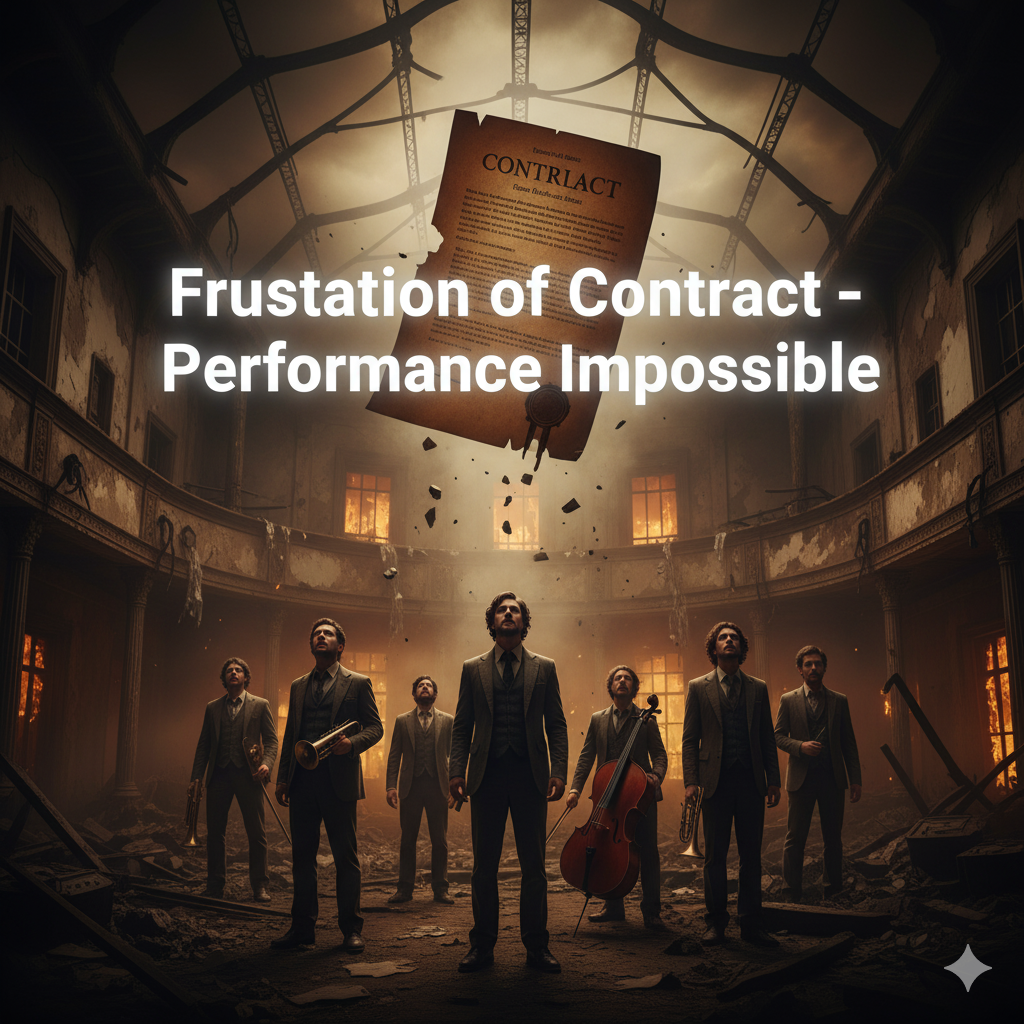
The Supreme Court clarified when “time is the essence” in commercial contracts. Despite a clause calling time essential, the extensions granted and the conduct of parties showed that strict timelines were not central here.
- Time was not the essence for ONGC’s pipe supply orders.
- Liquidated damages could not apply; only proven actual loss was recoverable.
- Arbitral Tribunal’s plausible view restored; High Court interference under Sections 34 & 37 was unwarranted.
Issues
- Should the arbitral award be set aside under Section 34 of the Arbitration and Conciliation Act, 1996?
- Was time the essence of the supply contract, allowing ONGC to levy liquidated damages?
Rules
- Whether time is essential is judged from the whole contract and parties’ conduct, not a single clause.
- Extensions and waiver clauses can dilute strict timelines.
- Where time is not essential, liquidated damages do not automatically follow; the promisee must prove actual loss.
- Under Sections 34/37, courts do not re-appreciate a tribunal’s plausible interpretation.
Facts (Timeline)

Arguments
Appellant (Welspun)
- Extensions and waiver showed time was not essential.
- LD cannot apply after waiver; only actual loss is recoverable.
- Tribunal’s view was reasonable; High Court overstepped Sec. 34/37.
Respondent (ONGC)
- Contract expressly said time is essence; LD clause must operate.
- Delays hurt project schedules; supplier should bear LD.
- High Court rightly corrected tribunal’s error.
Judgment

The Supreme Court restored the arbitral award. It held that, in this contract, time was not the essence, mainly due to the extension mechanisms and the parties’ behavior. Therefore, ONGC could not levy LD for periods it had effectively waived. Only actual damages proven on evidence were permissible.
- High Court’s interference under Sections 34/37 was improper.
- Welspun’s appeals allowed; ONGC’s appeal dismissed.
Ratio
A clause stating “time is essence” is not conclusive. Courts look at the entire contract and conduct. Extension and waiver provisions signal that strict time is not central. Where time is not of the essence, LD does not automatically apply; the claimant must prove real loss.
Appellate courts should not replace a tribunal’s reasonable reading with their own.
Why It Matters
- Drafting Tip: If time truly matters, avoid broad, repeated extensions without LD.
- Claims Strategy: Track actual loss evidence if LD may not stick.
- Arbitration Law: Respect the tribunal’s plausible view; courts have a limited correction role.
Key Takeaways
- “Time is essence” needs support from conduct and structure, not only words.
- Granting extensions often waives strictness about time.
- Without essence, LD turns into a proof of loss exercise.
- Section 34 is not a rehearing: plausible tribunal views stand.
Mnemonic + 3-Step Hook
Mnemonic: T-E-A — Time clause, Extensions, Actual loss.
- Read the contract (is time clause backed by structure?).
- Check conduct (extensions/waiver show non-essence?).
- Assess damages (LD or prove actual loss?).
IRAC Outline
Issue: Was time the essence; can LD be imposed; can award be set aside under Sec. 34?
Rule: Whole-contract test; conduct matters; extensions dilute essence; LD needs essence or proof of loss; limited court review.
Application: Multiple extensions and waiver language showed non-essence; ONGC must prove actual loss; tribunal’s reading was plausible.
Conclusion: Time not essence; LD disallowed for waived periods; arbitral award restored.
Glossary
- Essence of Contract
- A term so central that breach of timing lets the other side end the contract or claim LD.
- Liquidated Damages (LD)
- A pre-agreed sum payable on breach, used if time is truly essential.
- Waiver
- When a party voluntarily gives up a right (e.g., strict timelines by granting extensions).
FAQs
































































































Popular & Recent Post
































































Comment
Nothing for now